>These are technically Pagan recipes but they really could be enjoyed by anyone. We eat these things at Mabon, which is the fall equinox, typically between September 20 and 23. I don’t see any reason why they could not be enjoyed throughout the fall season all the way through Samhain (Halloween) to Yule (December 19-22).
Mabon is sort of known as the “Pagan Thanksgiving” since the tradition of a fall harvest feast carries through both holidays. The symbolic foods of Mabon are breads, nuts, apples, pomegranates, and vegetables such as potatoes, carrots, and onions. Meat prepared for the Mabon feast would typically be goose, mutton or pork, but beef is acceptible as well, as long as it’s prepared with other traditional Mabon things. For this feast, I offered a pot roast main dish and a roasted goose main dish for those who like something like that.
Obviously a feast like this is not meant for one person. Consider having a fall party based around eating, drinking, reflecting on blessings and the change of the season. Decorate in the traditional Mabon colors of red, orange, russet, maroon, purple, brown and gold. Bust out the Dark Mother Bread, spiced apple butter, wines and beer from the other Mabon blogs as well. Even if you are not Pagan, you can still use the change of season for a reason to get together with your loved ones and feast and be merry. We do it at Thanksgiving, so we can do it at other times too.
Please refer to this blog for information about Mabon in general: http://jessicajewettonline.blogspot.com/2011/09/mabon-sabbat-of-fall-equinox.html
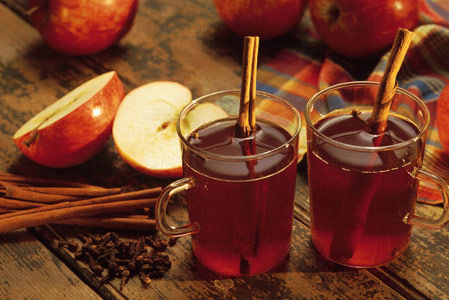
Hot Apple Cider
Prep time: 5 minutes
Cook time: 10 minutes
Serves 6.
Ingredients
6 cups apple cider
1/4 cup real maple syrup
2 cinnamon sticks
6 whole cloves
6 whole allspice berries
1 orange peel, cut into strips
1 lemon peel, cut into strips
Pour the apple cider and maple syrup into a large stainless steel saucepan. Place the cinnamon sticks, cloves, allspice berries, orange peel and lemon peel in the center of a washed square of cheesecloth; fold up the sides of the cheesecloth to enclose the bundle, then tie it up with a length of kitchen string. Drop the spice bundle into the cider mixture. Place the saucepan over moderate heat for 5 to 10 minutes, or until the cider is very hot but not boiling. Remove the cider from the heat. Discard the spice bundle. Ladle the cider into big cups or mugs, adding a fresh cinnamon stick to each serving if desired.
Harvest Pot Roast With Vegetables
This is a tender slow cooker pot roast with a flavorful homemade gravy. If you don’t care for rutabaga, use turnips or more potatoes and carrots. I used a boneless beef chuck roast, but any boneless pot roast cut will work.
Ingredients
6 slices bacon, halved crosswise
2 pounds red skinned or Yukon gold potatoes, peeled and cut in 2-inch pieces
1 small rutabaga, cut in 2-inch pieces
4 to 6 carrots, peeled, cut in 2-inch lengths, halved lengthwise
Salt and pepper
1 teaspoon dried leaf thyme, divided
1 boneless beef chuck roast, about 3 pounds
1 bag, about 16 ounces, frozen small white onions
8 ounces mushrooms, scrubbed and left whole, halved if large
1 1/2 cups beef broth
3 tablespoons tomato paste
2 tablespoons flour
2 to 3 tablespoons cold water
Preparation:
Place bacon over the bottom of the crockpot. Arrange potatoes, rutabaga, and carrots over the bacon. Sprinkle lightly with salt, pepper, and half of the thyme. Place the pot roast on the vegetables, then add onions, and mushrooms over and around the roast. Sprinkle lightly with salt, pepper, and the remaining thyme. Combine beef broth and tomato paste; pour over the pot roast. Cover and cook on LOW for 8 to 10 hours.
Remove the pot roast to a warm platter. With a slotted spoon, remove vegetables and arrange around the roast. Cover and keep warm. Separate fat and broth using a fat separator, or skim fat off the top of the broth; discard fat. Put the broth in a saucepan and bring to a boil; reduce heat to medium and simmer for 5 minutes.
In a cup of small bowl, whisk flour with water until smooth. Whisk the flour mixture into the broth until thickened and bubbly. Serve gravy with the meat and vegetables. Serves 6.
Roast Goose with Stuffing
Prep time: 30 minutes
Cook time: 5 hours 40 minutes
Serves 6.
Ingredients
10 French bread, cut into cubes
1 cup dried currants
4 apples – peeled, cored and sliced
1 tablespoon dried thyme
4 tablespoons butter, melted
1 tablespoon vegetable oil
1 (10 pound) goose
1 onion, chopped
1 carrot, chopped
1 stalk celery, chopped
1 clove garlic, minced
1 bay leaf
3 whole cloves
1 sprig fresh thyme
1 sprig fresh marjoram
1/4 cup white wine
1 teaspoon tomato paste
1 (10.5 ounce) can condensed chicken broth
1 tablespoon cornstarch
1/4 cup water
salt to taste
ground black pepper to taste
Directions
In a large bowl, combine bread, currants, apples, crumbled thyme, salt, pepper, and melted butter or margarine.
Wash goose inside and out. Pat dry. Stuff, truss, and tie goose. Prick bird all over with fork. Heat oil in roasting pan on top of stove. Brown goose lightly on all sides, then drain off pan drippings. Set goose breast side up in roasting pan. Add a little water, cover, and roast at 375 degrees F (190 degrees C) for one hour. Discard fat from roasting pan.
In a mixing bowl, combine chopped onion, carrot, celery, garlic, bay leaf, cloves, fresh thyme and marjoram, and sprinkle around the goose. Continue roasting uncovered for 20 to 25 minutes per pound, draining off fat at intervals. Add more water as required. Transfer cooked goose to platter, and keep warm by covering loosely with foil.
Skim off remaining fat in pan, and heat drippings and vegetables on top of stove until mixture is reduced. Stir in white wine, tomato paste, and chicken broth. Simmer for 10 to 15 minutes, then strain gravy. If necessary, add a little cornstarch mixed with water to thicken gravy.
Garlic-Roasted Red Potatoes & Greens
Ingredients
2 pounds Red-Skinned Potatoes, sliced
6 large Cloves Garlic, sliced lengthwise
1/3 cup Extra-Virgin Olive Oil
3 Tablespoons Wine Vinegar
Salt
Pepper
4 cups Watercress Sprigs, rinsed
2 Tablespoons Chives, chopped
Mix potatoes, garlic and oil in a 10 x 15″ rimmed pan. Bake at 450 degrees until well browned, about 1 1/4 hours. Turn vegetables with a wide spatula every 10-15 minutes. Pour vinegar into pan, scraping with spatula to release browned bits and to mix with potatoes. Add salt and pepper to taste. Pour potatoes into a wide, shallow bowl. Chop half the watercress and mix with potatoes. Tuck remaining watercress around potatoes and sprinkle with chives.
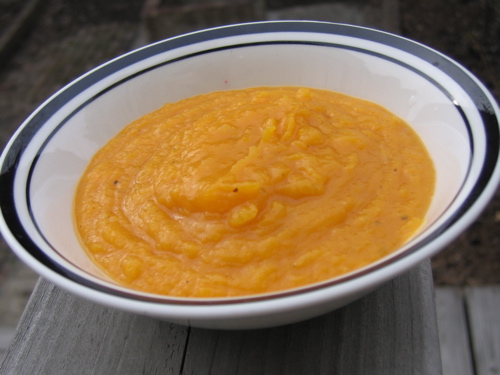
Butternut Squash Soup
Prep time: 15 minutes
Cook time: 45 minutes
Ingredients
3 tablespoons butter
1-1/2 small onion, chopped
1-1/2 stalks celery, chopped
1-1/2 medium carrot, chopped
3 medium potatoes, cubed
1-1/2 medium butternut squash – peeled, seeded, and cubed
1-1/2 (32 fluid ounce) containers chicken stock
salt and freshly ground black pepper to taste
Melt the butter in a large pot, and cook the onion, celery, carrot, potatoes, and squash 5 minutes, or until lightly browned. Pour in enough of the chicken stock to cover vegetables. Bring to a boil. Reduce heat to low, cover pot, and simmer 40 minutes, or until all vegetables are tender. Transfer the soup to a blender, and blend until smooth. Return to pot, and mix in any remaining stock to attain desired consistency. Season with salt and pepper.
Harvest Home Rolls
Adapted from allrecipes.com
Makes 9-12 rolls, depending on size
Ingredients
½ cup milk, warmed to 110 F
1 package yeast
¼ cup butter, melted
1 egg, beaten
1/8 sugar
½ – 1 tsp. salt
2 ¼- 2 ½ cups unbleached bread flour ( I used KA), plus extra for dusting
1 tablespoon oil
1 egg, beaten, for egg wash
Bloom the yeast in half the milk. I always add just a pinch of sugar at this stage too, maybe ½ tsp. Wait 15 minutes. Add the rest of the warm milk, melted butter, sugar and salt. Stir to dissolve. Add the beaten egg and stir. Gradually mix in the flour with a wooden spoon. Turn the dough onto a floured surface and knead for about 8 minutes, until the dough makes a satiny ball.
Pour a tablespoon of oil into the bowl. Place the ball of dough into the bowl and turn to coat. Cover with a clean towel and leave in a warm place to rise for about an hour, until doubled in size. After an hour, punch down the dough and let it rise until doubled again, 45-60 minutes. After the dough has risen a second time, lightly oil your hands and pinch off 12 small balls of dough. Do this by squeezing the dough between the thumb and forefinger of your fist.
Place on a parchment-lined baking sheet. Preheat the oven to 350 F. Brush beaten egg on top of each roll before baking. Bake 20-25 minutes, until golden brown. The egg wash will make the tops a nice, golden brown.
Kneading dough is an excellent time to infuse it with your intent. Love? Protection? I find that the time passes more quickly when I sing/chant as I’m kneading. “Hoof and Horn” is a favorite of mine because I feel that bread baking also honors gods of grain and agriculture, as well as the cycle of life. Whatever you serve, make the preparation of the meal part of the ritual. Listen to some special, meditative music. Chant. Light a candle as you cook. Say any words that seem appropriate at the time. It’s up to you. You can knead herbs into the bread dough for extra intent, if desired. For example, rosemary would be appropriate at Samhain for remembrance.
Pomegranate Sorbet
The turning point of the Autumnal Equinox is marked by the harvest. The weather is changing, the days grow short, and a favorite fruit, the sensual ruby-red pomegranate, appears at the fruit stand.
In much of the ancient world, the pomegranate symbolized the Goddess and fertility, a womb with many seeds, and the blood of life in its crimson juice. Use the beautiful pomegranate in an Autumnal Equinox ceremony to honor the Mother. Cut into the pomegranate with an athame with a white handle and tear it open by hand, squeezing the juice out and letting it drip onto the earth, over the fire, or into the cauldron. We recommend you have a pitcher of rose water to cleanse the hands afterwards. The ravaged fruit can be shared by all the participants, then offered to the fire or given back to Mother Earth, depending on your preference.
While performing this rite, say praises to the Goddess, giving thanks for the harvest, our many blessings, and all that is beautiful in the world. Implore the others in the circle to bow their heads and think about what they are thankful for and what they can sacrifice to help heal Mother Earth or spread positive energy to their family, friends, or community.
(The following pomegranate recipe is from Victoria Bearden, who has appeared frequently on national radio and television discussing her visions of the future. One of her more notable predicitions was the 1994 Northridge, California, earthquake.)
Serves 4 to 6
Ingredients
2 cups fresh pomegranate juice (see note)
1/3 cup freshly squeezed orange juice or tangelo juice (save rind)
1/2 teaspoon freshly squeezed ginger juice (see note)
1/4 cup sugar
1 orange, mandarin orange, blood orange, or tangelo, sliced, for garnish
Mint leaves, for garnish
1/3 cup fresh pomegranate seeds, for garnish
Mix all the liquid ingredients and sugar in a pan or plastic container that can be covered, airtight, and stored in the freezer. Freeze the juices for approximately 3 hours. When the mixture is frozen, break it up with a spoon or knife. Beat the mixture with a mixer until the chunks are fairly small, but not smooth. Return the mixture to the container and continue to freeze for 4 to 5 hours.
Make long curly citrus and rind strands with a lemon zester or grater. Spoon portions of the sorbet into pretty, chilled glasses (large martini glasses work well). Garnish with the citrus slices, 1 to 2 mint leaves per glass, and pomegranate seeds. Serve immediately because sorbet melts quickly.
Note: For the pomegranate juice, place the seeds in a blender on medium-high speed, then run through a fine strainer and collect the liquid in the container. Fruits vary in size and juice content, so start with one large fruit and see where that leaves you. You may need three or more fruits for 2 cups. Pick pomegranates that are really ripe, with leathery skin and very red, very sweet seeds. This will make a big difference in the flavor of the juice.
For the ginger juice, use a garlic press to extract the juice.
Read More










 Samhain is probably one of those holidays that most people don’t even realize is vastly Pagan in tradition. The evolution of Halloween is one of the clearest routes of insight into the merging of Pagan traditions with other traditions throughout the world, especially Christianity. As I have been helping people see what a Samhain feast could be like, I find myself getting tangled in more modern Halloween party websites. The lines between Samhain and Halloween are very blurred.