

Swiss cheese

Posted by Jessica Jewett 2 Comments »

Swiss cheeseThis blog title came to me several weeks ago when I began thinking about leaving 2012 behind and moving into 2013. You see, sometimes I encounter a person who has an energy field or an impression of their spirit that comes across to me as having holes. These holes represent the person being weakened by loss, emotional or physical ailments, or terrible difficulties in leaving trauma in the past. I can see other people in this manner but I cannot see or read myself at all, which is a common block with all spiritually sensitive people. We are not allowed to look into ourselves the way we look into other people because having that ability would be the same as having the answers before the test.

It occurred to me, however, that I’m probably one of those souls full of holes. I’m banged up and scarred no more than any other soul, but the burden of knowing a big chunk of my past life history makes it all the more present for me. I’m aware of the Swiss cheese quality of my soul and I wonder if it might ever be repaired. If I am to follow my own teachings, then it must be so that happiness must be found within myself and not some outside source. Other people cannot complete you. Praise and glory are only temporary. These things must be the decoration on the cake but not the cake or even the icing themselves. I’ve noticed over the years that this is the most difficult life lesson we all must walk through, often over the course of hundreds of years of life. True happiness is only achieved by wrestling every other demon to the ground.

I’m rather critical of myself, and that is a big demon that refuses to be wrestled. Whenever I make a mistake, I tend to berate myself for days or weeks as if the mistake was a sign of my lack of intelligence or ability. The voice that berates me often becomes the voice of a male abuser in my past. That voice tends to get louder when I go through cycles every few years of putting myself more out there in search of romantic companionship. How dare you think you’re good enough for anyone, who could possibly want a creature in a wheelchair, etc. No matter what the critical words are, they basically come down to the same idea that I’m not good enough. I don’t try hard enough. I don’t work hard enough. It goes on and on, especially when I’m trying something new, yet logic dictates that none of these things are true. Of course I know they’re not true, but the demon is there lurking in shapes of people who spent years berating me in those ways to keep me under their control. Anyone who has survived abusive relationships knows what I mean.

In 2012, I think I was going through an awakening. I have begun in earnest to converse with myself when those thoughts come to mind. I remind myself that those ideas have no basis in reality. It’s sort of like reciting affirmations but without the cheese factor. Toward the end of 2012, I have begun to realize something rather important that hearkens back to something my good friend, Beth, once told me. Other people’s negativity is none of my business. This means that it’s up to me to deflect people prone to constant negativity from my life before those traits begin to have an effect on me.

It also means, to me, that 2013 needs to be a time of transition and better choices in the people with whom I associate. That’s the entire point of writing such a personal blog. Believe me, I take no pleasure in pointing out my weaknesses in public but I believe in leading by example. Sweeping out the old to make room for the new is an important task in different phases of our lives. Feeling weighed down or constantly agitated may have root causes, in part, to the friends and family members you allow to influence you. I would like to say unconditional love and the welcoming of anyone into our lives is best for promoting universal love and acceptance, but there is something to be said for allowing negative influences to carve out holes in your soul. Unconditional love has to be a two-way street, or your soul will end up being a funnel with energy spilling onto the ground and wasted. Our spiritual energy is our most precious possession. If there isn’t enough, we’re not capable of love. It must be maintained like any other aspect of health in daily life.

How do we maintain our spiritual energy to and from the people in our lives? I have been looking at every person in my life and asking a few basic questions that become quite illuminating in our relationship health.

  • Does the person make me feel good or bad about myself more often than not?
  • Does the person put effort into the relationship? In other words, if you stopped initiating contact, would the person notice?
  • Do they show as much interest in your life as you do in theirs?

These questions all amount to balance in the relationship. It doesn’t mean you must talk to each other every day or be as close as Thelma and Louise or McCartney and Lennon. The sense of balance in any relationship – even distant ones – simply means getting back the fulfillment from it that you’re trying to give. If the relationship appears severely out of balance in either direction, then it’s probably having a negative affect on your spiritual energy or that of the other person.

My advice to you in the beginning of this year is to really look at the people in your life and examine them through those basic questions. Not only examine them but examine yourself as well. Are you being a good friend? It’s the basic golden rule – treat others as you would want to be treated. Lead the life you want others to emulate.

And the most important thing I want all of you to consider in every part of your life is whether a person, belief, idea, activity, or deed makes you feel good about yourself or bad about yourself. Remember that feeling negative about a person, place, or thing is your intuition telling you that something is wrong. Ask yourself why you keep people in your life if they make you feel negative more often than not. Difficult decisions may follow but you will be liberated in the end.

Perhaps we can all slay the “not good enough” demon this year if we help each other.

Read More
Decorate your home for Christmas as the Victorians did

Posted by Jessica Jewett 4 Comments »

This blog was originally posted on November 28, 2009, but I decided to repost it for this holiday season.

I sometimes wonder ever year when I tell people about how the people of the nineteenth century celebrated Christmas if they knew that some of their decorations were based in Pagan tradition. For example, any household of that time that could get it would put evergreen garland over their doorways and along their staircase banisters. Evergreens were a symbol of the renewal of life and were thought to bring good luck into the house, and hanging over the doorways was thought to ward off evil spirits in Pagan tradition. Holly was also used in the nineteenth century household for holiday decoration. All greenery would be adorned with berries, ribbon, wax, dough or metal ornaments and dried flowers. Pine cones were also scattered throughout the house.

The vast majority of Victorians could not afford to buy Christmas decorations and there wasn’t that much of a commercialized industry for it like there is today so most families made all of their decorations on their own. In this economic collapse we’re enduring now, I think it would be a better idea for people to take the time to make their own decorations rather than running out to Walmart to buy strings of fake berry garland or mass produced ornaments. The Victorians were about family and the value of putting work into an end result of which they could be proud and feel accomplishment. Doing some adapted crafts that the Victorians did can be a good way to spend time together as a family as well, a concept that has gotten lost in this modern society.

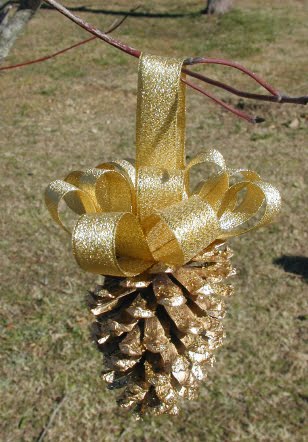
One easy, unique and money-saving decorating trick that the Victorians used was decorating pine cones and making ornaments out of them. You don’t have to buy pine cones. You can take your children out to a park to collect them for this project. I did this as a child and it made me feel good to know things I made were on display alongside the store bought things. You will need a roll of ribbon and glue (probably a hot glue gun for today) and if you want to put a modern twist, you can get glitter or red, green or gold paint. Cut a length of ribbon (I think I used about 12 inches per cone but if you like small bows, use less) and create a series of loops. This is really trial and error until you achieve the number and size of loops that you want. Use the glue to hold together the base of your bow and then glue your bow to the top of your pine cone. If you want to hang your pine cone somewhere, cut another length of ribbon, loop it and glue it into the decorative ribbon. You can also place these pine cones on fireplace mantles or dining tables without the hanging loop. If you would like your cone to glitter, get a glue stick and coat your cone in glue, and then sprinkle glitter over it.

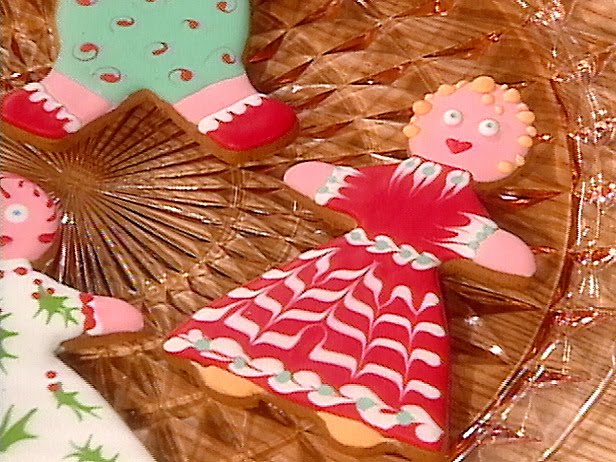
Another Christmas craft that the Victorians did was making dough ornaments. They looked like cookies but they were not meant to be eaten. The recipe is easy as well. Mix 3 cups of flour, 3/4 cup of salt and 1-1/4 cups water. As you mix the ingredients together, take care that the dough should be very stiff. If the dough becomes sticky while you’re kneading it, add flour to it. Coat a rolling pin with a light dusting of flour and roll out the dough as you would if you were making sugar cookies. Then you use cookie cutters to cut out the shapes you want for your ornaments. Popular shapes in the nineteenth century were angels, animals and children. You will also need to cut a hole in the top of each ornament so that you can pass ribbon through it later when you want to hang it. Once everything is cut out, bake your ornaments at 250 degrees Fahrenheit for two hours. Do not start painting (most people today paint with acrylics) until the ornaments are completely cool. Lastly, poke a ribbon through the hole at the top and hang it on your tree or wherever you wish.

Another type of ornament that the Victorians liked to make were called Dresdens. These ornaments were meant to give the appearance of being metal but they were actually cardboard cutouts painted in metallic gold and silver. People don’t seem to make these very much anymore and I can’t find a picture of one but they were wildly popular in the nineteenth century. The easiest way to do it is find stencils or cookie cutters of Christmas shapes — again, the authentic way to go is angels, animals, children, fruit, etc. — and trace the shapes out onto heavy cardboard. Cut the shapes out (make sure you have a hole at the top for hanging ribbon) and use metallic paint to decorate your shapes. When I did this, I painted the whole ornament silver first, let it dry completely, and then I used gold for detail. If you have a bird, for example, the gold detail would be the eyes, feathers and accents as needed to give it a somewhat realistic look.

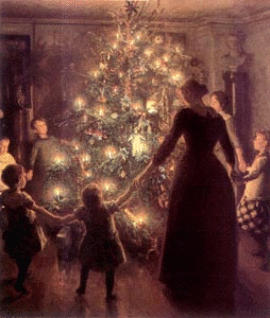
The early Victorian Christmas trees were not the monstrous floor-to-ceiling decorated within an inch of its life trees that we have today. As I said in the last blog with historic Christmas recipes, Queen Victoria and Prince Albert brought the obscure German tradition into all the rage in the 1840s. By the 1850s, most Americans adopted the tradition as well. An authentic Christmas tree of the 1850s and 1860s would have been small. There would have been a big round table in a visible place in the home and the tree would have been on the table. Instead of Christmas lights (no electricity), they lit their tree with candles on safe branches as to not start any accidental fires. Evergreen garlands were draped around the branches along with strings of popcorn and dried berries. The ornaments were a huge mix ranging from dolls to Dresdens to dough ornaments to dried flowers to real and false fruit to wax ornaments and so on. It was very popular to have little figures of children and jolly round-faced men peeking out from behind branches.

As the Industrial Revolution took hold after the Civil War, mass produced ornaments and decorations became more readily available. Families began abandoning the small trees on tables for the large floor-to-ceiling trees that we still use today. Glass ornaments increased in popularity as the century progressed and tinsel became more popular. Tinsel has actually been around since the 1600s from what my research shows but it was not very common on early American Christmas trees.

I hope you are able to take some of the ideas from our foremothers and forefathers to use in your holiday season this year. These activities not only save money over store bought decorations but they will give your home a very personal, unique look, and keep your children busy as well.

Read More

A history of gingerbread (with recipes)

Posted by Jessica Jewett 2 Comments »

This blog was originally posted on November 30, 2009, but I decided to repost it for this holiday season.

Gingerbread did not always signify the holidays and cookies iced to look like jolly little people. That’s actually a very small part of its history. Ginger was used in the ancient world for medicinal purposes, believed to settle upset stomachs as one example. The ancient Egyptians and the ancient Greeks both made an early form of gingerbread for ceremonial purposes.

It was the 11th century when ginger made its way to Europe. An early recipe had ingredients like ground almonds, stale breadcrumbs, rosewater, sugar and ginger. The mixture formed a paste that was pressed into wooden molds. The shapes were used like stories to show the news of the times and molds could be made into the shapes of royal figures, religious symbols and so on. They decorated the cookies with gold paint that could be eaten or with white icing for poorer people.

Queen Elizabeth I brought the gingerbread man to popularity in the 16th century when she presented dignitaries with cookies made in their own images. The recipe evolved as well, replacing breadcrumbs with flour and adding eggs and other sweet things. People began tying ribbon on them and handing them out at fairs. They also exchanged gingerbread cookies as a showing of love for one another. Since there was no refrigeration in those days either, people used the strong scent of gingerbread to hide the nasty odor of meat going bad in homes.

Gingerbread houses originated in Germany when the Brothers Grimm released a book of fairy tales that included Hansel and Gretel. In the story, the children were lured into a house made of gingerbread. As Germans came to America, they brought the tradition of making gingerbread houses with them and it spread throughout the country as well as Britain. In some places, it became a tradition to make a gingerbread house for the Christmas season and then break it open and eat it for the new year.

Here are a few gingerbread recipes.

How to make a gingerbread house.
How to make gingerbread men.

Read More

Categories