>
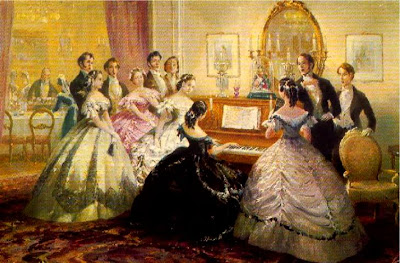 |
| A rockin’ Victorian party. |
Today I discovered an awesome blog called American Duchess: Historical Costuming from the 16th to the 20th Century (click the link to see the blog) and I noticed that the blog owner goes to a lot of parties thrown in the style of different historical periods. For example, she recently got together with other costumers and had an 18th century ice cream social in the period between the American and French Revolutions. In another blog, I saw that she went to a Christmas dinner done accurately to the Regency period. I remembered as I looked around the American Duchess blog that the ladies over at Marie Antoinette’s Gossip Guide to the 18th Century and The Duchess of Devonshire’s Gossip Guide to the 18th Century have talked about having parties with a historical theme too.
*Carrie Bradshaw voice*
Then I got to thinking … are the 18th and 19th centuries the new 21st century parties?
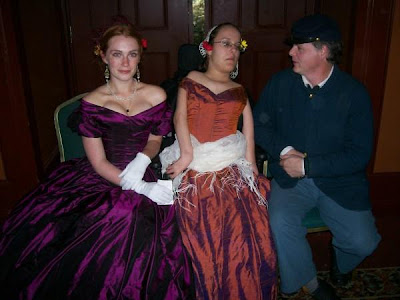 |
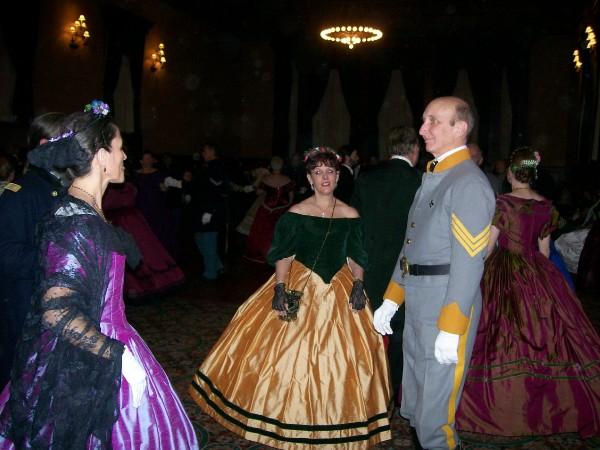
| I partied Civil War style in Gettysburg. |
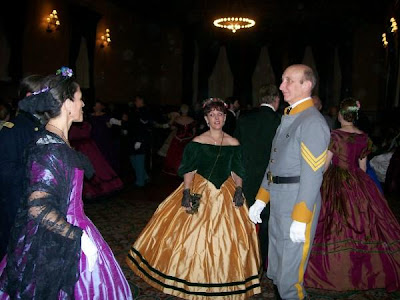 |
| More of the Civil War ball in Gettysburg. |
I have partied in period style, as you can see from the pictures above, and it was an amazing night! I really think that this could be something to change the way we have events and make them more unique. Reenactors and costume enthusiasts could go full out for holidays with their chosen period of expertise, while non-reenactors could do scaled back versions of historical parties by adding elements of history into their food, decor, activities, etc., without cramming into corsets and massive skirts. Let’s face it – there are only so many parties we can throw before they all blend together and stop being memorable. Why not add something special to impress your family and friends?
I decided to put together a few ideas to inspire you in creating your own historically themed parties.
18th Century Parties
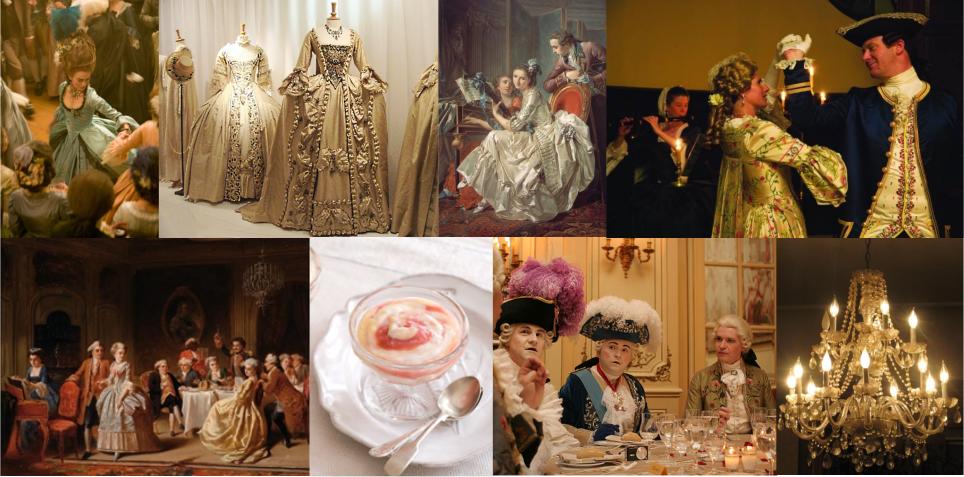
The hardcore reenactor. – Choose a specific period for your guests to emulate in their attire. Suppose you’re throwing a birthday party. It has become popular to emulate the French court around the Marie Antoinette era of the 1770s and 1780s before everything went to hell in the 1790s. Make sure you have your guests excited about dressing up and help them out if they’re not familiar with the period. What did they do at parties back then? They ate rich food, they gambled (look up period games like faro or pour et contre), they drank, they danced, they played music, etc. Research dances and songs popular in the period. The dances may look complicated but they are actually quite fun when you’re being whirled around the floor. Learning is half the fun! Another idea, if the weather is good, is to take the party outside to a beautiful garden. The 18th century was populated by people of the Enlightenment who explored ideas about returning to nature. It was fashionable to go rustic for entertainment.
The lite history fan. – If you’re not a reenactor and you don’t have the time or resources to go the completely authentic route, you can add historical elements to your party without overpowering it. Focus on food and decor to give your party an 18th century flair. Food at that time was a visual expression of beauty as much as it was an expression of taste. Find a few fabulous historical recipes that are visually stunning and tell your guests about them while they sample the flavors. Desserts usually make the biggest impression. Rococo design was massively popular in the 18th century, so decorate your party space by inspiration from art of the period. Use lots of lace, flowers, soft colors, and so forth. Crystals were hugely popular. The more your party space looks like Versailles, the better.
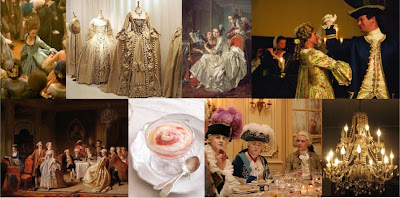 |
| Inspiration for your 18th century party. |
19th Century Parties
The hardcore reenactor. – I typically favor Christmas and New Years Eve parties with a 19th century flair as opposed to more decadent parties of the 18th century. The Victorians really knew how to do Christmas in style thanks to Queen Victoria and Prince Albert bringing traditions to the Western world that we have yet to abandon. Victorians were all about making comfort food beautiful. They were meat and potatoes kind of people but they dressed up these things to be fabulous for parties. There are countless sources on holiday foods that the Victorians left behind and they will make your table gorgeous and impress your guests. Choose whether you would like to do a Regency Christmas or a Victorian Christmas and have your guests come appropriately dressed. Teach them Christmas songs from the period, eat, drink, play games, teach dances of the period, play music and be merry.
The lite history fan. – Luckily with the 19th century, everything is fairly easy to do. As with the 18th century, you don’t have to ask your guests to come dressed in period attire, but you can serve authentic food and add authentic decorating elements. They liked a lot of natural greenery, homemade ornaments, and berries for accents. They played word games and loved singing around the piano or violin every chance they got. You will be surprised to find out that a lot of Victorian traditions are things that we still do today. A big element to make a party truly Victorian is cutting electrical light and illuminating your party space with candelabras, oil lamps, and so forth. Candlelight always creates an old atmosphere that people love.
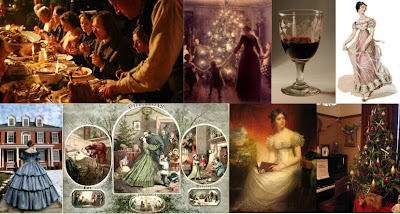 |
| Inspiration for your 19th century party. |
Read More