>
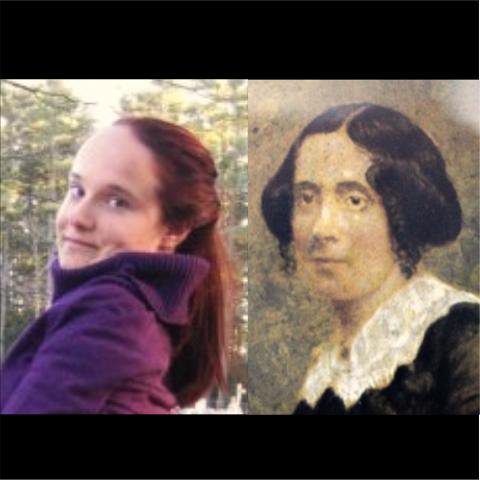
With the 150th anniversary of the beginning of the Civil War upon us, I have been thinking quite a lot about what the war means to me personally. The anniversary has me feeling quite strange, honestly. I have been experiencing a bit of a foggy sensation, and it has me quiet, reflective, sad and apprehensive all at the same time. The bombardment of Civil War programming on television and the release if the Robert Redford film, The Conspirator, this month is starting to trigger very old feelings again. I have worked for many years to put my issues with the war to rest and I thought I had basically been successful but the bombardment of triggers often opens old wounds. I’m speaking from the perspective of being reincarnated from the nineteenth century itself, of course. I have difficulty, even now, removing myself from the war and looking at it strictly from the point of view of a contemporary historian. If you remember anything firsthand about the war, you can’t shake it off. You just can’t. It becomes part of your soul.
What does the Civil War mean to me? Quite honestly, I’m struggling to answer this question. I feel like I need to sort it out though.
A big part of me feels guilty – whether it’s my leftover feelings from that time or my present self analyzing my past self – because I was not washed over with feelings of patriotism for defending my country. I believed in the Union and I was against slavery but I was not willing to risk my family to keep the Union together. The beginning of the war was marked by a lot of struggling on my part to keep Lawrence (Joshua Lawrence Chamberlain) at home where I knew he would be safe. In present times, I watch all those documentaries with newspapers and such depicting the country being caught up in huge sweeps of patriotism and the desire to make the South pay for their rebellion and I look at it with guilt because I was not one of those people. I was perfectly okay with other people going to war. I just wanted my family left out of it.
Of course, we all know I lost the battle to keep Lawrence out of the war. He was commissioned lieutenant colonel of the 20th Maine by Governor Washburn in the summer of 1862. I was not even informed of the commission. I knew he wanted to enlist but the way I found out about the commission was as shocking as it was painful. The newspapers had gotten hold of the story before Lawrence had a chance to tell me the final plans and that was the way I found out my husband was going to war – I read it in the newspaper. Naturally, my reaction was not sunshine and roses. Our marriage had been based on a meeting of minds and intellectual partnership as much as it was a romantic love match. I enjoyed an unusual equality with my husband in everything except his career decisions, which was always a point of strain on our relationship. He had a habit of making decisions like that without including my input as much as I wanted and demanded of him. So, we fought. We fought quite a bit in his last days as a civilian. I had a terrible, sinking feeling that he was going to be killed and orphan his family. My anger toward him came from paralyzing fear.
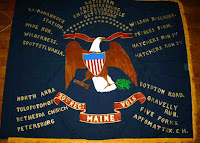
Before he left, though, I adopted the attitude of I don’t like it but I need to support him anyway. If he was killed, I could never live with myself if his last thoughts were of causing me disappointment, anger, tears, etc. I tried to become an exemplary officer’s wife. I sewed the gold fringe on the regimental colors (a replica is pictured at right), I got to know some of the other army wives in Brunswick, and I steeled myself for raising two small children without their father. None of us knew how long the war would last. When it began, everybody thought it would be a 90 day war and by the time Lawrence got his commission, the war was already a year old. I can’t say for sure what “historical Fanny” felt, meaning I haven’t seen any documentation, but looking back on it, I felt it was going to be a long, bloody war but I never said so out loud.
During the war, it is well documented that I traveled to see Lawrence in the army camps or to care for him in military hospitals when he was ill or wounded. Apparently I saw him a lot more than other army wives did and some people in my life privately thought I was neglecting my children. Perhaps I was but it wasn’t intentional. I loved my children and I wanted to try and keep their father with them. I lived the entire war in fear that some catastrophe was going to happen and I don’t think I fully exhaled from 1862 until 1865. I think my reasoning was as long as I was near him, I could somehow protect him from being hurt, or if he was hurt, I could exert some control over his recovery. As any wife in love with her husband felt in that situation, I missed him horribly when he wasn’t home. He missed me even more. He performed his duties better and he was more focused in the times around my visits. We were always better together than apart.
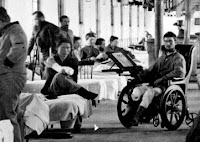
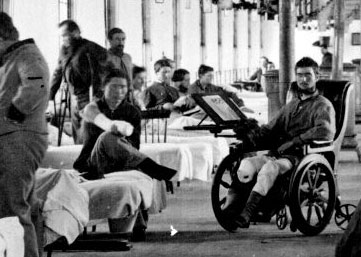
I don’t have much insight into what I felt for the men he commanded. Some officer’s wives became like mothers of the regiments while others had nothing to do with the other men. I think I was somewhere in between. I feel deep empathy and compassion for other soldiers, especially those he commanded, and the feeling exists in a deep place within me that I associate with my “old” emotions. I still experience motherly instincts toward them, particularly the ones who are stuck and unaware that they were killed in action. I spent enough time in military hospitals during the war that I certainly would have helped look after the wounded in between duties of looking after Lawrence. I would have seen men with horrible wounds, limbs severed, experienced the blood and gore, and I’m certain of this because I still have periodic nightmares about it. Those images burn themselves into your soul and you carry them with you in future lives. After Lawrence was shot in 1864, we were told he was going to die and I know I was trying to frame my mind around that when I went to his bedside because of the emotional memories around that time. He lingered for months when we were expecting his death in days. He got better, he got worse, he got better, and so on. The psychological torture of having hope taken away and given back repeatedly was often more than I could bear. Eventually he did recover but he was never the same and neither was I.
Today I make a point to visit battlefields whenever possible. There is an inane sense of responsibility that I feel toward the men and woman who endured the war. I suppose the word I would use to sum up the Civil War in my experience with it is sacrifice. We all sacrificed our lives even if we didn’t physically die. The Civil War was the collective death of antiquated society and the violent birth of modern society. It set the stage for struggles to come. In the way that we all divide time now between “before 9/11” and “after 9/11”, so too did we divide time back then between “before the war” and “after the war”. I believe we were all killed in a way because we were all different people after the war ended. Many relationships of survivors didn’t survive. My own marriage hung on by a thread for years because we both were so changed by the things we endured. There were a lot of times when I felt deep resentment toward the war for forcing me to sacrifice my life and my family and those feelings still linger a bit today. On the other side of the coin, I was and am immensely proud of Lawrence, the men under his command, and all others who had the gumption to fight for their beliefs and face the very real possibility of dying for those beliefs. The mixed feelings of resentment and pride were and are confusing and the root of why I struggle to answer the question of what the Civil War means to me.
In great deeds, something abides. On great fields, something stays. Forms change and pass; bodies disappear; but spirits linger, to consecrate ground for the vision-place of souls. And reverent men and women from afar, and generations that know us not and that we know not of, heart-drawn to see where and by whom great things were suffered and done for them, shall come to this deathless field, to ponder and dream; and lo! the shadow of a mighty presence shall wrap them in its bosom, and the power of the vision pass into their souls. This is the great reward of service. To live, far out and on, in the life of others; this is the mystery of the Christ,–to give life’s best for such high sake that it shall be found again unto life eternal.
– Joshua Lawrence Chamberlain
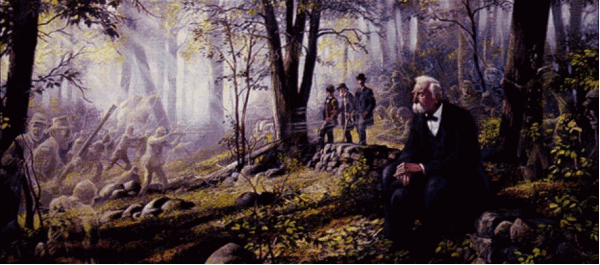 |
| A painting of Joshua Lawrence Chamberlain as an old man surrounded by the ghosts of Little Round Top. |
Read More