

>Joshua L. Chamberlain’s Granddaughters

Posted by Jessica Jewett 2 Comments »

>

This photograph looks like any average American family on holiday in 1909. The patriarch sits proudly on a boulder, an arm resting to the side and suggesting a casual manner to his personality, while his dutiful son sits behind him. His daughter stands in an impressive profile pose to his right, her head resting on her hand just the same way her mother was photographed fifty years before that family holiday. She is the family matriarch now. To her right, her mother-in-law and husband stand off to the side, as if they know they will never be as important to her as her father, who called her his soulmate. Three young girls stand scattered among the boulders, certainly listening to their grandfather’s deep baritone voice reciting details of his time there in his youth.

They look like an average American family on holiday but they’re not. They were the Chamberlain family. The old man lounging on the boulder was General Joshua Lawrence Chamberlain and those people were his children, grandchildren and in-laws gathered at Devil’s Den in Gettysburg in 1909.

To be a fly on a boulder, right?

Joshua Lawrence Chamberlain only had two surviving children out of five and of the two, only Grace married and had her own family. She was married on April 24, 1881, to Horace Allen, the son of her parents’ friends. It wasn’t until 1893 that she began having children.

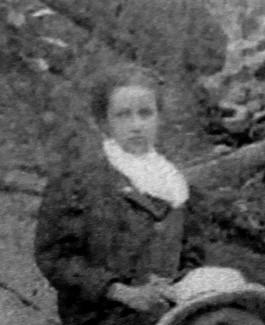
Eleanor Wyllys Allen in 1909.

Eleanor Wyllys Allen was born on December 13, 1893, in Boston, Massachusetts. She was described as being 5 foot 8 inches tall with a high forehead, hazel eyes, a straight nose, a small mouth, dark brown hair, a receding chin, olive complexion, and an oval face. To me, she looked quite a bit like her grandmother, Fanny Chamberlain. It can be said that Eleanor possessed her grandmother’s independent, stubborn and ambitious nature as well.


By 1919, Eleanor defied the ideal womanly role of wife and mother by earning her undergraduate, master’s, and doctoral degrees from Radcliffe University. She also graduated from Portia Law School, and studied at Yale University Law School, as well as the University of Brussels. She became a legal scholar, specializing in International Law, as well as an author, and a foreign service official of the Department of State. In time, Eleanor’s accomplishments mounted as she became the author of “a well-regarded study of the position of foreign states before national courts.” Additionally, she served several years as curator of the Olivart Collection of International Law in the Harvard Law School. Much like her grandfather, Joshua Lawrence Chamberlain, Eleanor was fluent in four European languages. In 1945, she served her country by becoming a member of the State Department Foreign Service, serving in Austria, Switzerland, the Netherlands and United Kingdom. Having never married, Eleanor nevertheless led a fulfilled life and passed away on September 13, 1973.
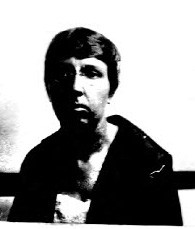
Eleanor Wyllys Allen in 1921.
Beatrice Lawrence Allen in 1909.

Beatrice Lawrence Allen was born after Eleanor on January 24, 1896, in Roxbury, Massachusetts. Little is known about Beatrice, although she was described as being 5 foot 7 inches tall with a high forehead, gray eyes, a slightly roman nose, a straight mouth, light brown hair, fair complexion, and an oval face. Unlike her older sister, she looked more like her grandfather than her grandmother.


Also unlike her career-driven sister, Beatrice chose a more traditional life when she married David Longfellow Patten at the All Saints Episcopal Church in Brookline, Massachusetts, on April 2, 1918. A graduate of the Massachusetts Institute of Technology, he was described as being 6 foot 1 inch tall with a slender build, blue eyes, dark brown/black hair, and a fair complexion. He served in the US Army during WWI as a lieutenant and in 1919, he was a second lieutenant in the Coast Artillery Corps. After WWI, David became an electrical engineer and then a banker. Not much else is known about Beatrice except that she passed away relatively young on January 15, 1943, in Seattle, Washington. David lived until 1981. The Pattens never had children.
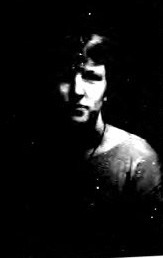
Beatrice Lawrence Allen in 1924.
Marriage announcement for Beatrice and David.

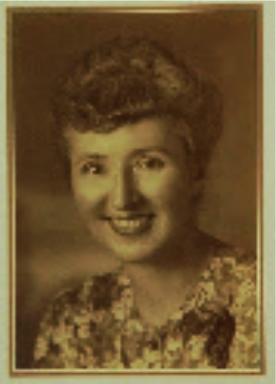
Rosamond Allen in 1909.

Youngest of the Allen daughters, Rosamond was born on December 26, 1898, in Roxbury, Massachusetts. She became the most well-known of Joshua Lawrence Chamberlain’s granddaughters, at times, in my opinion, capitalizing on his fame. Like Beatrice, she never married or had children. She was described as being 5 foot 5 inches tall with a high forehead, brown eyes, a roman nose, a small mouth, dark brown hair, medium complexion, and a full face. She was an interesting physical blend of her mother, father, grandmother and grandfather.


Rosamond became the spokesperson for the Chamberlain family, mainly because she lived to be 102-years-old, vastly outliving the rest of her family. She finally died in 2000, the same year I graduated high school. In 1990, People magazine did an article on descendants of Civil War veterans. Here is Rosamond’s piece of the article. I believe the Civil War series reference is to the Ken Burns series.

Wearing a green dress with an antique gold pocket watch pinned to her chest, Rosamond Allen, 92, leans back in her rocking chair and talks about the hero of Little Round Top, the man who led his Union troops to the South’s surrender at Appomattox Court House. But it isn’t the fighting commander of the 20th Maine that she remembers; it is a gentle grandfather called Gennie. “We children called him Gennie because we couldn’t pronounce ‘general,’ ” she says. “For all the fact that he was famous, he was very gentle—just the opposite of pompous. He had white hair and a fuzzy mustache. I’d hate to kiss him, I’ll tell you that.”

Because she hated the cold northern winters, Rosamond, the general’s last surviving descendant, moved to Florida more than 40 years ago. She still keeps up the family ties with Bowdoin College in Brunswick, Maine, where Chamberlain was president; his home is next to the campus. Now, however, the apartment complex where she lives in St. Petersburg is being sold, and she and the other elderly residents are being evicted. “I didn’t do anything to deserve this,” she says. “I just wanted to live here until I die.” Rosamond wasn’t contacted in connection with the Civil War series and watched little of it. “I think,” she says, “that war is a great causation of suffering.”

Rosamond is largely responsible for the negative impression historians have of her grandmother, Fanny. She described her as a cold, unfeeling, bitter woman, but people fail to understand that Rosamond was born after her grandmother lost her eyesight and became dependent on family members and nurses. A woman who was, in her youth, so independent and stubborn, often fell into depression in her declining years. Rosamond was only six-years-old when Fanny died and would not have understood the things she endured in her life. Still, historians tend to take Rosamond’s skewed view on things as the gospel truth, with the exception of Diane Monroe Smith.

According to Wikipedia, upon Chamberlain’s death in 1914 his daughter, Grace Allen inherited the home and its contents. Grace rented rooms in the home from 1916 until her death in 1937, when her daughter, Rosamond Allen, inherited the home. Rosamond sold the home and most of its contents to Emery Booker in 1939, who divided the building into seven apartments which were primarily used by Bowdoin College students. In 1983, the Pejepscot Historical Society purchased the building from Booker’s estate for the price of $75,000, and opened the home as a museum in 1984. When Rosamond inherited the home and sold it, she unknowingly scattered an unbelievable treasure trove of family heirlooms and artifacts to the winds, many never to be seen again. She ripped the buttons and shoulder boards from her grandfather’s Civil War uniforms and threw the wool away. Rumor has it that what she couldn’t sell, she left in boxes on the sidewalk in front of the house and let people pilfer through them, leading to endless frustration for Chamberlain historians today.

Interestingly enough, as much as Rosamond disliked her grandmother, they appear to have shared the same religious views. She left her land to a Unitarian church. In Fanny’s lifetime, she was known to frequent Unitarian churches when she was not with her husband, an ardent Congregationalist. Found online:

Stephen Allen, a Boston businessman and lawyer, arrived in Duxbury in 1870.   Allen was a self-made man from New Hampshire, who made his fortune largely in Boston real estate.  He came to Duxbury to find a summer home and quickly realized the potential for profit in the town’s seaside farms, and proceeded to buy as much as he could of the old Myles Standish farm and its surrounding neighborhood of Captain’s Hill.

At his death in 1894 he left his estate to his son Horace.  After Horace’s death in 1919, the property passed to his three daughters: Beatrice, Rosamond and Eleanor.  In 1939, they divided the property into three parts.

Rosamond Allen received about 12 1/2 acres, and moved her family’s former barn, by then changed into a garden guest house, onto her portion of the estate. In 1980 she left her beloved Duxbury estate to the regional Unitarian Universalist Church association for a retreat house known as Cedar Hill.  It served as a place for area Unitarian Universalists to relax and reflect for 30 years.

Cedar Hill still exists as the retreat it became when Rosamond gave the land to them. She also returned a battle flag to Alabama after her grandfather died. From the Alabama State Archives:

This flag is an Army of Northern Virginia, 6th wool bunting issue. It was manufactured at the Richmond Depot during the winter of 1864-1865. It was returned to the State of Alabama in June 1943 by Mrs. Rosamond Allen, South Duxbury, Massachusetts. Mrs. Allen was representing the heirs of Joshua L. Chamberlain of Maine. The flag of the 5th Alabama Battalion, captured during “Picketts Charge” at Gettysburg was returned at the same time. It is unclear as to how Chamberlain came into the possession of either flag. While this flag was listed as “Alabama flag not positively identified,” by Department staff, evidence suggests that it may be the flag of the 43rd Alabama Infantry.

In Major General A. A. Humphrey’s report concerning the action near Hatcher’s Run, Virginia, March 25, 1865 he states that “we captured the battle flags of the Forty-third and Sixty-ninth1 Alabama.” At the time of the engagement Brigadier General Joshua Chamberlain commanded the First Brigade, First Division, Fifth Army Corps. During the engagement Chamberlain placed the 185th New York Infantry (Colonel Gustavus Sniper commanding) in the front line in a space between the Divisions of General Miles and General Mott. The men at Colonel Sniper’s front consisted of the 43rd, 59th and 60th Alabama Infantry. Lt. Col. Charles H. Weygant, 124th New York Volunteers, also reported engaging these regiments and capturing the flag of the 59th Alabama Infantry. While the flag of the 59th Alabama was forwarded to the War Department, there is no record of the disposition of the flag of the 43rd Alabama. Since General Humphrey does report the capture of the 43rd Alabama’s flag and there is no record of its having been sent to the War Department it is possible that the flag was taken (picked up) by the men under Sniper’s command and retained by Chamberlain as a trophy.
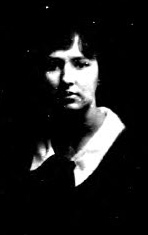
Rosamond Allen in 1924.

Rosamond Allen in 1931.
Rosamond Allen in Life magazine in around 1990.
Read More

>Bonne Année!

Posted by Jessica Jewett No Comments »

>

Bonsior, mes très chers amis!

Here we are in the last dwindling hours of 2010. Most people are either getting ready to go out tonight or spending time quietly with family and friends. Many of my friends are staying in tonight in order to watch the ubergroup that is now NKOTBSB on Dick Clark’s New Year’s Rockin’ Eve somewhere around 11:30 on the East coast. I think my family is mostly staying in tonight even though we were invited to our neighbors’ soirée. My uncle has been fighting double pneumonia for days now and his partner works so much that they basically collapse around eight every night. I would kind of like to go to the soirée next door but I don’t know anybody else except our neighbors and I get antsy in situations where I don’t feel like I fit in with people. So, here I sit, cuddling my dog and typing away on my laptop as I do most nights. It’s comfortable. It’s routine. I saw my best friend today and we worked on a scrapbook together, which was, honestly, better than any big glittery soirée with a bunch of booze and loud people. I don’t drink anyway! I’m betting she doesn’t even make it until midnight, that old lady. Wink, wink!

Paris, the motherland, is already in 2011. This picture isn’t from tonight but I like it anyway. It’s strange to think that half the world is already in a whole new year while the other half still exists in the previous year.

I didn’t accomplish all of the goals I set for myself in 2009 going into 2010, but on the other hand, I accomplished a lot that I didn’t think possible for myself. I had wanted to publish another book but I decided rushing myself wasn’t going to work. I don’t want to publish a poorly written book just to check off a New Year’s resolution. I have several books in the works though. My novel about the French Revolution is in its second draft and probably the closest to being finished. The sequel to From the Darkness Risen is progressing fairly well too. At some point, I plan to release an expanded special edition of Unveiled: Fanny Chamberlain Reincarnated because there is more than enough material and interest to re-release such a book. I have a few new books that I never anticipated beginning either but when the muse moves me, I tend to follow its lead. Certainly there will be a book published in 2011 but as I said, I’m more concerned with publishing good material than fulfilling resolutions.

There are several personal things I hope to accomplish in 2011 as well. These things have to do with better management of my energy and time. I have fatigue issues that were new in 2010 and I find myself unable to go at the constant pace that I prefer. Something is forcing me to slow down. Oil painting is another thing I hope to fill 2011 with and I have a lot of ideas in my head. Painting is actually a calming activity that helps me focus. I thought it would fry my nerves but it’s actually quite the opposite. It’s comforting.

Of course 2011 is going to bring more traveling and gathering with my friends, beginning next month. A bunch of my friends are getting together for a double birthday dinner for my friend Gretchen and me. Then in May, I’m going on a cruise with Sissy, Dena, Maryka, and basically everybody else. After that, in June, I’m going to New York with Abbie, Di, Katy and others. I would like to go to Gettysburg again too but I’m not sure if that will work out since I’m facing the prospect of major surgery this year. I will practically need a construction worker to rebuild the sorry excuses for feet I got in this life. I’m hoping I can take care of this problem after my traveling so I can recover into next winter when I’m not doing anything of interest.

What about you? How was your 2010? What are your hopes for 2011?

Read More

>Reincarnation and phobias

Posted by Jessica Jewett 4 Comments »

>

It’s more of a common story than you might think.

A person has some sort of accident… or act of malice done to them… or an intentional harm to themselves. The person slips beneath the surface of some body of water and immediately fights for the surface again because that is our body’s natural instinct. Panic sets in as the burning and pressure builds in the lungs. The need for air is overpowering. Finally, as the end draws near, the body loses its will to fight for life and the soul prepares to depart, much like an involuntary surrender to the inevitable. It’s the end of a life underneath the surface of water.

A generation passes. Life goes on and people mourn the loss. Eventually most of the people who knew the poor drowning victim pass into the afterlife as well. Maybe two or three generations pass.

The drowning victim decides to give a go at life again. Rebirth. Only this time, he or she is reborn with baggage from the last moments of the previous life ending in such a torturous way, although there is not likely to be literal memories of the incident or any thought of reincarnation at all. But the demon of the drowning manifests itself in the new life as a phobia of water. An unexplained and horrifying fear of water overcomes the person each time they are faced with the prospect of swimming. What is probably passed off as a random phobia or fear of the unknown actually has its roots in not letting go of the terror the previous body felt in the process of drowning at the end of the last night.

Of course, this is just one example of a phobia born of a past life. This one is the one I see the most in my research. Drowning does not always result in a phobia in the next life though. It all depends on the advanced stage of the soul and the ability of that soul to resolve old issues before carrying them into the next life. The range of hydrophobia is wide as well. I’ve seen some hydrophobia resulting from reincarnation ranging from basic nightmares but still having the ability to get into water, to such paralyzing hydrophobia that the person struggles just to take a shower.

Additionally, people have to be careful not to assign every phobia to originating with an incident in a past life. I only look into past life causes if every present life cause has been explored and exhausted. Naturally, if, for example, you were mugged at gunpoint a few years ago, a phobia of guns would probably develop from that moment and there would be no need to investigate further back into your past life history. Most common things like a fear of spiders simply boils down to a fear of the unknown, fearing creepy crawly things, and learning to be afraid of it from watching parental figures being afraid of it. My grandmother is afraid of spiders, so my mother grew up watching that fear and learned to fear spiders as well, and so on through me now being afraid of spiders because of them. There is no need to look into past lives for the causes of phobias when you can trace the steps back to some point in your present life. Since arachnophobia originates with my grandmother, I would, if I was looking for a way to help her, try to find the cause in her. Was it this life? If I can find no logical cause in her present life for suffering from arachnophobia, that would be the point where I would begin looking into her previous lives for a cause. That’s just an example though because I can’t read people that close to me.

Why bother finding out if your phobia originated in a past life? I usually tell people not to open that can of worms if they’re just looking for something interesting or like a parlor game. It is like going through a process of counseling and that process can be quite painful. I usually get people at the end of their rope who have tried everything else to overcome their phobia, including traditional psychiatry. The reason why I help people with their phobias originating in past lives is to give them guidance in letting go of old trauma so they can move on from it. That’s the only reason to open the can of phobia worms – the intention to work for freedom from it.

My mother was one of these drowning victims that was born into her present life with hydrophobia. She has nightmares sometimes of her death by drowning quite a long time ago. Through our work in spiritual matters, she has been able to work through it enough to get waist deep in the ocean but no further than that. She used to not go into the ocean at all. There has been progress in that regard. Sometimes simply understanding the cause of the phobia allows for some relief in the symptoms of anxiety and terror. Once a person understands why they are afraid, then it’s important to go through exposure to the thing that causes the fear, but that should be done with someone who understands the situation. Exposure to the phobic trigger is necessary to overcome it. I can’t snap my fingers and make it go away for you, nor could a psychiatrist or hypnotherapist. You have to be willing to go through exposure and discomfort to overcome your fears but only once you understand their causes.

In my case, I was born with a deeply paralyzing fear of guns and cannons. It is a true phobia to the point of disrupting otherwise pleasant activities like fireworks on the Fourth of July. Since I can remember, I have associated weaponry or sounds like weaponry with the imminent demise of people I love. It was never fear for my own life. It was always fear that people I love would be killed. Most of my life was marked by staying indoors during fireworks displays, never allowing my mother to keep guns in the house, and panic attacks at Civil War reenactments. Additionally, I’m extremely anxious in crowds and phobic of being trampled or separated from my loved ones. There were no causes for these phobias in my present life, as the symptoms have been present since I was born. Over the years I found ways to cope with my phobias like always hanging back at the end of a crowd, visiting sutleries during battles so I don’t have to look at the reenactments, not looking directly at weapons in museums, etc.

In my early 20s, I began to realize that my phobias came from two separate past lives. I have been in violent mob situations twice – once during the New York City Draft Riots of 1863 and before that, during the French Revolution. I was not on the streets of Manhattan during the Draft Riots but I was trapped in my hotel on the edge of the rioting for days. The army rolled cannons into the hotel lobby and in the park across the street, prepared to fire into the mobs should they get any more out of control. During the French Revolution, I was swept up in a mob ready to storm a royal palace, separated from people I knew and knocked to the ground, almost trampled to death. These events have repeated in many nightmares. I also suspect that I associate the imminent demise of my loved ones when I see or hear gunfire because of the Civil War and the fact that my husband was nearly killed. There is nothing so terrifying for a woman as sitting by your husband’s bedside watching him hang between life and death for months.

The symptoms of my phobias have lifted a bit, although I’m still very fearful of weaponry. I have been able to sit through fireworks displays in the last eight years or so but it is not without fighting my fear every moment. It takes work and exposure to overcome it. If I go a year or so without going to a reenactment, the phobia is much harder to control than if I was going every couple of months. The most important thing is to teach yourself to remember that what trauma befell you in past lives is just that – something in the past – and it’s not likely to happen again. Overcoming the voice of panic from the past is the key.

Read More

Categories