

Friday the 13th is a mysterious superstition

Posted by Jessica Jewett 3 Comments »

Do you have friggatriskaidekaphobia? That’s the fear of Friday the 13th. Frigga is the Norse goddess for whom Friday is named and triskaidekaphobia means the fear of the number 13, but did you know that the number 13 is not really unlucky and Friday the 13th is not really cursed?

The superstitions surrounding Friday the 13th did not arise until 1869, according to folklorists. There is a much more recent idea that it was connected to the Knights Templar but it’s probably a modern invention that has no real basis in historical fact.

From Wikipedia regarding theories on the origins of Friday the 13th:

In numerology, the number twelve is considered the number of completeness, as reflected in the twelve months of the year, twelve hours of the clock, twelve gods of Olympus, twelve tribes of Israel, twelve Apostles of Jesus, the 12 Descendants of Muhammad Imams, etc., whereas the number thirteen was considered irregular, transgressing this completeness. There is also a superstition, thought by some to derive from the Last Supper or a Norse myth, that having thirteen people seated at a table will result in the death of one of the diners.

Friday has been considered an unlucky day at least since the 14th century’s The Canterbury Tales, and many other professions have regarded Friday as an unlucky day to undertake journeys or begin new projects. Black Friday has been associated with stock market crashes and other disasters since the 1800s. It has also been suggested that Friday has been considered an unlucky day because, according to Christian scripture and tradition, Jesus was crucified on a Friday.

One author, noting that references are all but nonexistent before 1907 but frequently seen thereafter, has argued that its popularity derives from the publication that year of Thomas W. Lawson’s popular novel Friday, the Thirteenth, in which an unscrupulous broker takes advantage of the superstition to create a Wall Street panic on a Friday the 13th. Records of the superstition are rarely found before the 20th century, when it became extremely common.

Since there is no specific event to inspire the Friday the 13th superstition, it is interesting that somewhere between 17 and 20 million Americans are fearful of that day. Some people won’t even go to work, others won’t eat out, and many won’t even set it as a wedding date.

How do you react to Friday the 13th?

Read More

Gettysburg Address, November 19, 1863

Posted by Jessica Jewett 1 Comment »

Today marks the 148th anniversary of the Gettysburg Address given by Abraham Lincoln. The president was invited to the dedication of the new and incomplete Soldiers’ National Cemetery four months after the Battle of Gettysburg. He was really invited as an afterthought for “a few appropriate remarks” as the key speaker was Edward Everett. A master orator, Everett droned on for two hours before the president took the podium for a two minute speech. Afterward, Lincoln felt the speech was a failure, but Everett was impressed, saying it only took Lincoln two minutes to come to the point of what took him two hours.

There were 53,000 casualties in three days at Gettysburg. Picture an entire stadium of people dead or wounded over a 72-hour period. Now I hear they’re saying casualty estimates may be low. That is why the National Cemetery was necessary and why the president came to help dedicate it. That is why we still honor those dead today. They gave the ultimate sacrifice for their country.

The Gettysburg Address is arguably one of the most famous and celebrated speeches in American history. Here you may listen to it as read by Jeff Daniels, who played Joshua L. Chamberlain in the film Gettysburg, and then you may read the text of the speech below it. Really consider it. Does it still apply today?

Four score and seven years ago our fathers brought forth on this continent, a new nation, conceived in Liberty, and dedicated to the proposition that all men are created equal.

Now we are engaged in a great civil war, testing whether that nation, or any nation so conceived and so dedicated, can long endure. We are met on a great battle-field of that war. We have come to dedicate a portion of that field, as a final resting place for those who here gave their lives that that nation might live. It is altogether fitting and proper that we should do this.

But, in a larger sense, we can not dedicate — we can not consecrate — we can not hallow — this ground. The brave men, living and dead, who struggled here, have consecrated it, far above our poor power to add or detract. The world will little note, nor long remember what we say here, but it can never forget what they did here. It is for us the living, rather, to be dedicated here to the unfinished work which they who fought here have thus far so nobly advanced. It is rather for us to be here dedicated to the great task remaining before us — that from these honored dead we take increased devotion to that cause for which they gave the last full measure of devotion — that we here highly resolve that these dead shall not have died in vain — that this nation, under God, shall have a new birth of freedom — and that government of the people, by the people, for the people, shall not perish from the earth.

–Abraham Lincoln, 19 November, 1863

Read More

Help save this South Carolina plantation!

Posted by Jessica Jewett 1 Comment »

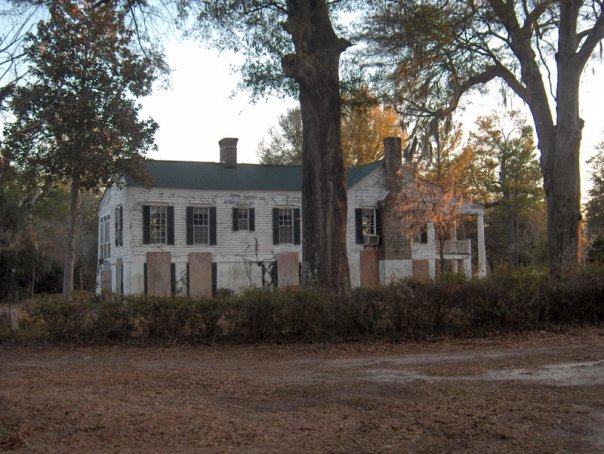
>I volunteer for an endangered plantation called Red Doe in Florence, South Carolina, (see photos at the end) and we are in desperate need of help to rescue this historic place from desecration and decay. For a little history, Red Doe was built by Evander Gregg in 1846 and he later served as a sergeant major in the 3rd South Carolina State Troops during the Civil War. After changing hands many times for 160 years, this plantation has fallen into disrepair and relies almost entirely on volunteers to keep it safe. If we are able to keep the plantation going, repair it and so forth, we would like to open it to the public so they can learn more about South Carolina history and draw a little more tourism for the local economy. One of my jobs will be to advise in making Red Doe an ADA compliant tourist attraction. My job cannot happen until Red Doe has been restored into better condition.

We cannot rescue Red Doe alone. We need your help. Red Doe Plantation, Inc. is a 501c3 non-profit and all donations are tax deductible and it needs donations of money, supplies, volunteers, etc. Currently, there is a need for donations of money and Christmas decorations because we are opening the home to tourists December 2-4 for our fundraiser program, Christmas Through the Ages. Step inside the big house and travel back to Christmas past as living historians portray scenes from colonial, antebellum, pre-WWI and post-WWII life during the holidays. Learn about traditional home-made gifts, music, dances and sample seasonal recipes. Then vote with donations for your favorite themed room. The top three rooms will be back next year with the fourth being a surprise! If you are in South Carolina that weekend, please join us. I will be there portraying my usual Fanny Chamberlain.

If you cannot come and visit Red Doe yourself, please consider making a secure, tax deductible donation through Red Doe’s website at www.reddoeplantation.bbnow.org and please email reddoeplantation@yahoo.com if you are able to volunteer time, supplies, labor, etc. There are 4900 people on my Facebook, 1200 people on my Twitter, and who knows how many read my blog. If each of you donated just one dollar, that would make a huge difference!

P.S. Refer to this blog for information about Christmas Through the Ages: http://jessicajewettonline.blogspot.com/2011/09/christmas-through-ages-at-red-doe.html

I would consider this a personal favor. Thank you.

Read More

Categories