 As most of you know, I’m an avid reader. My reading time does, of course, depend on my work load, but I find myself reading in the middle of the night just to satisfy those literary urges. I do think people become better writers by reading a lot of different books. For me, it helps to find out what I like or didn’t like about what an author did.
So, I decided that at the end of every month, I plan to start posting brief reviews of all the books I read. This will be faster and easier for all of us than me posting individual reviews of some length. I read a lot of different kinds of books, so there won’t be any rhyme or reason to it. I just read whatever strikes my fancy at the moment.
Call it Jessica’s Book Digest, if you will.
Here are the books I read in December. The first one began in November but I finished it in December. It counts!
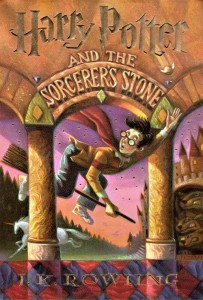 Harry Potter and the Sorcerer’s Stone
by J.K. Rowling
5 stars
I know, I’m late to the Harry Potter thing. It can’t even be called fashionably late when your friends stage an intervention. The book, I thought, was wonderfully written with great imagination. It helped for me that I recognized Victorian literary qualities in Rowling’s style. Fantasy is a tough genre for me to enjoy because I need to believe in the possibility that the fantasy world created by the author could exist in reality. If I don’t buy it, I don’t enjoy it. However, Potter is a world that I not only believe could exist in reality, but I’m waiting for my acceptance letter to Hogwarts. Sadly, the owl hasn’t arrived yet. Harry himself reminds me of a Victorian hero, and although he sounds mature for his age, I never forgot that he was just a boy. That’s hard to do. I hate writing children, mainly because I don’t, in all honesty, remember much about being a child myself. I was an adult from birth. Even the villains have some likable qualities, and that is equally hard to do as a writer. Reading the Potter books will allow me to experience childhood in a magical way and I am looking forward to getting started on the second book. I’m going to read all of them before tackling the movies. I do recommend these books even if you’re not sure you’ll like them. I wasn’t sure but now I find they’re a wonderful escape from the daily grind.
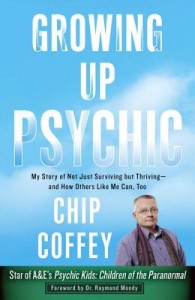 Growing Up Psychic: My Story of Not Just Surviving but Thriving–and How Others Like Me Can, Too
by Chip Coffey
4 stars
I started this book a long time ago but set it aside when life got busy. As a child medium, I could have used help like this, so I wanted to see if anything I could still learn from it. Chip Coffey has a straightforward writing style that, while sounds like his speaking voice, lacks descriptive power and style. That’s probably the fiction writer in me reacting to a distinctly nonfiction book. I had a little trouble staying focused on it at times. However, this is a great book for parents raising child mediums. A lot of it describes Coffey’s upbrining and coming to accept himself as a psychic medium. It’s to the point and doesn’t dramatize the issue into something out of a horror movie. There is a great deal of practical advice, vocabulary lists, and so forth. I would categorize this book as more for beginners, which is to be expected, because parents with child mediums or child mediums themselves are indeed beginners in this field. If you’re looking for insider information on Coffey’s Paranormal State experiences, you will be disappointed, but there is a great deal of insider information on the children featured on Psychic Kids. Many of the children contributed written material to the book that will be very helpful for child mediums to read.
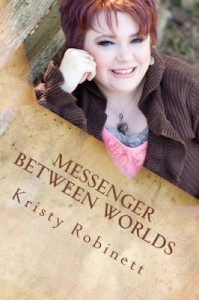 Messenger Between Worlds
by Kristy Robinett
4 stars
I may be a little biased about this book because Kristy is my friend, but I thought she wrote in a brave, honest style about her life as a medium. Her intent with the book, in my view, was to inspire people with recounting her difficult life and how she turned her struggles into helping other people. I touched on the fact that I’m a medium in my own book, but I wasn’t able to be as brave as her in revealing my truth. People sometimes think psychics and mediums writing books is just another facet of their money making machines, but they fail to understand how tough it can be to expose things about ourselves that many in this world mercilessly ridicule. Kristy tells her story with integrity and manages to describe even the most difficult life experiences with a positive lesson in the end. Her advice about relationships with the living and the dead often strikes the reader as basic but the truth of it cannot be denied. Sometimes we need to be reminded of the most basic ways to express love and respect. Kristy explains it without being high and mighty. Her writing style is conversational, yet literary. Like with Chip Coffey’s book, I had to deduct one star because there were some errors that should have been corrected by an editor. Otherwise, it was a wonderful book!
 Noble Cause: A Novel of Love and War
by Jessica James
3 stars
What are the odds of finding another Civil War fiction author with a name so similar to mine? Noble Cause follows Alexander Hunt and Andrea Evans through the Civil War as they chase each other from opposite sides. Andrea is a spy and courier for the Union dressed as a boy when they first know each other, while Hunter is a Confederate cavalry commander loosely based on the Gray Ghost, John Mosby. Through many twists in the novel, Andrea and Hunter spend the war veering between trying to kill each other and falling in love. I had a few qualms with this novel, which is why I gave it three stars. James extended several scenes that didn’t require such length and I found myself wanting to skim when scenes were drawn out too long. She also wrote Andrea in such a way that got a little too close to making her very unlikable. A heroine should not drive the reader to want to skim past her scenes to get to a more likable character. That was why I stopped reading the Sookie Stackhouse series. I couldn’t stand her but liked everyone else. Hunter is written as an idealistic romantic Confederate hero, and although it could have come across as cliche with him, I found him very attractive and convincing as a man. Sometimes female authors struggle to write men accurately, but I dare say, James struggled more with female characters. The combat scenes were also very, very well written, which is incredibly difficult to do, speaking as someone who has done it. With some better editing and closer attention on some anachronisms, James has wonderful potential as a historical author.
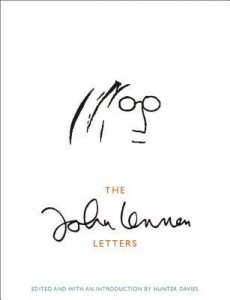 The John Lennon Letters
by John Lennon, edited by Hunter Davies
5 stars
This is a stunning book and a must have for any John Lennon fan. I got it for Christmas and I have been through it a few times. When I got it, I thought it was going to be basic transcripts of his letters with some explanation by the editor, which is what most historical collections do. Davies filled the book with photographs of each letter in addition to the transcripts and context explanations, allowing the readers to feel like they’ve got pieces of John for themselves. His letters are charming, funny, witty, sometimes arrogant, and often filled with drawings and jokes. He had a way of tailoring every letter to the person meant to receive it. I enjoyed seeing a few early things he made for Cynthia, his first wife, before he was famous. This is a book that doesn’t necessarily have to be read from start to finish either. Sometimes I just open it to a random page and see what John has to say that day. I do recommend that you buy the hardback book, not any e-reader version. Some books are simply meant to be tangible objects. Highly recommended!
Read More








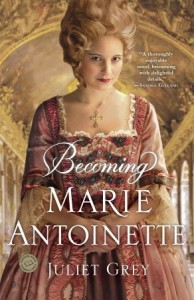 Becoming Marie Antoinette
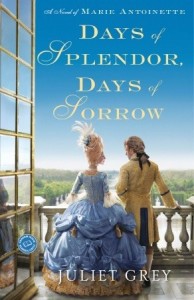 Days of Splendor, Days of Sorrow: A Novel of Marie Antoinette
 I had a little discussion about this very question the other night. Some people in the paranormal community have this theory that people who write novels or short stories or even poems are actually doing a form of mediumship. This doesn’t happen all the time but it happens enough that we have to take notice. I never actually thought about this before this year and here’s what made me wonder.