



>Setting the record straight about Fanny Chamberlain

Posted by Jessica Jewett 5 Comments »

>I am going to have to write this blog in the third person and detach myself emotionally from it, otherwise the things that need to be said will get jumbled and sound like I’m lashing out. I will, however, say that it took me years to get to a point where “the Fanny backlash” no longer causes me serious pain. That life ended in 1905 and even though I’m very public about my past life, including writing this book telling my story, part of my journey has been to teach myself to let go of the lingering anger and sorrow from that life. I was well aware of what people thought of me back then and I’m well aware of what people think of me now. I will never fit in with the status quo and I have accepted that.

All that being said, from a historical perspective, there seems to have been a poisonous myth grown up around Fanny Chamberlain that needs to be eradicated. As long as I am here and breathing, I cannot let the myth stand untested. This is where I will turn to third person in speaking about her to address the myths.
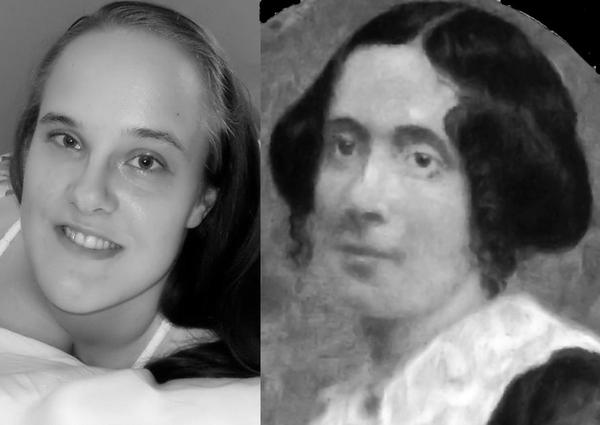
Up until the publication of Diane Monroe Smith’s book, Fanny & Joshua, in 1999, historians left Fanny as an unpleasant footnote in Joshua Lawrence Chamberlain’s biographies. Pictures were painted of her as being cold, unfeeling, self-serving, flighty, vain and a spinster desperate to marry the first available man whether she loved him or not. I have seen some people go as far as to say she was a lesbian and spent more time with her lesbian lovers than her own husband. We have to ask ourselves as historians and history enthusiasts today, where did these ideas originate? Certainly they did not originate from primary sources and that is the most frustrating aspect of the entire subject. The opinions about Fanny cannot come from primary sources because the bulk of Fanny’s written material has either been destroyed over the years or is in private collections inaccessible to the public.

Also, much of the Fanny myth was spun by her granddaughter, Rosamond Allen, who only knew Fanny for the last twelve years of her life. By that point, Fanny was dealing with the depression that came with the total loss of her eyesight. Rosamond only knew a woman suffering from illness, disability and depression. She cannot be relied upon to paint an accurate picture of a life that spanned 80 years. In the 1930s, Rosamond sold the Chamberlain house and almost everything in it. I have heard things about how she got rid of papers and letters that I cannot repeat, but it points to a granddaughter born so late that she had little to no attachment to her grandparents’ possessions. This is not as reliable of a source as people think.

Another part of the general Chamberlain myth was spun by Ellis Spear. He served under Lawrence in the 20th Maine and took over after Lawrence was promoted out of the regiment. They began as friends but by the late nineteenth century into the early twentieth century, Spear became bitter and argued with Lawrence about things that happened forty or fifty years before. Spear was not truthful in all of his accounts, yet one of the biographies about Lawrence drew heavily from his writings. That particular biography was very critical of Fanny when it mentioned her at all and many of the conclusions drawn were by the modern author who skewed his own opinion into the documentation. Biographies are dangerous when the author takes too much liberty with interpretation and preconceived notions.

So, who do we believe about Fanny? We could begin by addressing the biggest myth about her – that she never loved her husband, Joshua Lawrence Chamberlain. Since there isn’t a lot of her written material left in comparison to the volumes of his written material, people seem to draw the conclusion that there was no love for him, or that she was even incapable of love altogether. I have a few very telling pieces of her letters that I have found deeply buried online and in the Smith book. Let’s look:

I am sitting now at the same window where we sat together all that night. How could you think that I would shrink from you ever! You who seem so holy, so pure and noble to me! — how could I even if you did press my finger to your dear lips? O! there was nothing even then, that you could have done that would not have seemed beautiful and right to me. Ah! those nights! so full of terrible beauty; will they never come again?…O! dear Lawrence I would know you more, and I would have you know me as you never have known me. My soul longs to speak to yours as it never has spoken…I rest in you as I never have rested before; — you know it, do you not? and I would be everything to you; I would nestle closely in your arms forever, and love you and cling to you and be your ‘bird’: dear, precious heart! -January 1852

She’s a cold hearted snake, right? That certainly sounds like a woman deeply in love to me, especially when you take into account her other letters that she wrote expressing the fact that she had a difficult time expressing her feelings. That really gets to the heart of the matter. Lawrence had a habit, in his excitement over having a lady love, of showing her letters to his mother, his sister, his brothers, their friends, etc. He thought she hung the moon and he wanted other people to think she hung the moon too, so he showed people her thoughts and feelings. Fanny was very private about what she thought and felt, however. When she found out what he was doing, she begged him to stop showing people her letters and she stopped expressing her deepest feelings in future letters, instead choosing to make their face-to-face encounters that much sweeter and more private. She explained her position:

You know dear Lawrence that I may breathe to you, even as to my own heart, in all innocence and perfect trustfulness, those things which would ever sink me in the estimation and respect of any third person; for no other being can know what we are to each other. -ca. 1850s

Neither Fanny nor Lawrence were without their faults. Lawrence had a terrible jealous streak, he could be very insecure, he came on very strong with his feelings and wore his heart on his sleeve. He had not endured abandonment and loss as Fanny had in her youth. Fanny’s private nature and difficulty expressing her feelings was rooted in the fact that she was sent away from the only home she ever knew at the age of four to be shipped around to various relatives until she was finally adopted by her biological first cousin, Reverend George Adams. We know now the damage that an unstable early childhood and adoption can do to a person when the matter is not handled carefully. She grew up in a good home but her behavior suggested that she feared abandonment and chose to rely on her own independence than rely on people who might disappear someday.

People also seem to assume that Fanny’s early desire for a platonic marriage was a sign of her distaste for Lawrence. We have to look outside of the bubble of their relationship to understand why Fanny might have felt that way. In the nineteenth century, childbirth was the biggest threat to a woman’s life. As a girl, Fanny heard of a local woman who lost her husband at sea and she developed a fear of ships and water that lasted the rest of her life. If one takes that into consideration, then hearing of another local woman who died in childbirth would certainly inspire fears for her own life in the bloody mess of having children.

Perhaps the biggest reason why Fanny wanted to delay motherhood was because of how she lived her life before she was married. The majority of women at that time never had any real independence. They went from their father’s household to their husband’s household, ultimately ruled by both men in different phases of her life. Fanny, on the other hand, didn’t even get married until she was 30, although she did want to be married earlier. There was a gap in her adult life without a husband to rule her. She moved to Portland from Brunswick in the late 1840s and lived in a studio in a part of the city populated by artists, sculptors and musicians. She led an independent life there, which was very unique for women of her time. Only the illness and death of her adoptive mother brought her back home to Brunswick and falling in love with Lawrence kept her from going back to that life in Portland.

Fanny was also more educated than her peers. She went to a music school in New York City where she learned to become a music teacher herself. She then moved a thousand miles away to Georgia and became a music teacher at a ladies school. Her decision to go was not her lack of love for her fiance but because she refused to enter into a marriage with debts. Upon marriage in those days, everything belonging to a woman became the legal property and responsibility of her husband, including any debts she incurred as a single woman. She refused to do that to Lawrence, so while he finished his education, she worked to improve their future. She resisted the idea of becoming a housewife bound to home and hearth because it was, frankly, a waste of her education and talents, and she knew it. Also, she knew they were not a wealthy couple and she did not want Lawrence to shoulder the responsibility of providing for the family alone. If she had an education and work skills, in her mind, two incomes were better for their future than one. Having children too soon would force her to stay home.

Lawrence suggested that they delay conceiving a child for a few years by using contraceptives. He knew her better than the historians do today and he knew that her idea for a platonic marriage was not due to her lack of desire for him. On the contrary, his letters from that period of discussion show that they were well aware of their mutual desire, or “that measure of humanity,” as he called it. Birth control was illegal in those days, so the fact that they discussed the future of their sexual relationship at length shows that they were trying to compromise on Fanny’s fear of childbirth and her desire to contribute to the family. The fact that Fanny conceived within four weeks of their wedding day and the rapid births of children clearly shows that their physical relationship was intense and a natural extension of their mutual love.

This is just a small piece of the myth of Fanny Chamberlain. There is a lot more to it but I don’t want to make the blog too long.

As a somewhat altered, maybe wiser, no less emotional development of a soul that once bore the name Fanny, I can tell you unequivocally that my heart loved his. Part of my soul will never stop loving his. I understand the curiosity about our lives at that time and I understand there are a lot of Lawrence’s female fans who loathe me because my name was once Fanny Chamberlain. Some of his fans can be rather hardcore and unwilling to see the other side of the coin. I was basically spat on and unfairly judged just last night by someone who deemed herself “crazy about Lawrence.”

Please remember when you study anybody famous in history that they are not just words on a page or grainy black and white pictures to be judged, picked apart, adored, hated, objectified, and so forth. The soul is deathless. Just because the life concluded does not mean those souls are gone forever. We are out there amongst you feeling the shadows of our old identities. Don’t judge us without knowing the whole story. Whether you believe it or not, I did love him and I devoted as much of my life to him as I could, though neither of us were perfect.

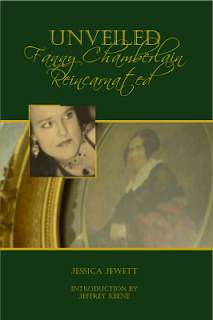
To learn the rest of my story, please click the book below.
Read More

>Excerpt of Fire on the Mississippi

Posted by Jessica Jewett 1 Comment »

>Here is an excerpt from my current novel, Fire on the Mississippi (tentative title), which is the sequel to From the Darkness Risen and you can find that on Amazon, Barnes & Noble, etc. This is a raw, unedited draft. I’m trying to write the whole thing from start to finish without editing and then re-approach the whole thing after an entire first draft is completed. This is a new writing method for me but I find it liberating, actually. All of the characters in this scene were real, historical figures in Civil War era St. Louis, except Eva Grimm, who is my creation and one of the central figures. This pro-Confederate network actually existed in St. Louis and I’ll be writing about the actual things they did. Robert Louden alias Charles Dale in St. Louis history was a rat bastard and I think I will thoroughly enjoy writing him. He was the equivalent of a domestic terrorist. Here is his first scene.

—————-

Tuesday
St. Louis, Missouri

Eva considered hiring another carriage and going back home as she stood before the building at the address scrawled on the mysterious letter clutched in her hand.  Was she really back there again, back to a place of secrets and lies in her life?  Thaddeus had worked tirelessly at her side to eradicate those behaviors from her character.  Her secretive behavior nearly cost her the presence of that loving man in her life once already.

The limestone building towered three floors above her and appeared to be someone’s home.  Surely it could not be Mrs. Sappington’s home.  That woman, who regularly engaged in espionage work for the Confederacy, lived out on the Manchester road, not there in the center of the city.

Curtains fluttered in the window to the right and she suddenly felt observed.  Self-consciously, she touched her bonnet and fluffed her blue plaid skirt, but did she truly want to stay?

The front door swung open and Mrs. Sappington’s round, smiling face appeared.  She lightly descended the front stoop and met Eva in an embrace that instantly made her uneasy.  She glanced around the street to see if anyone watched them.  No one paid attention but she had never gotten along with that woman and found her greeting quite bizarre.

“Miss Reed!  I mean Mrs. Grimm!  So good to see you again.”

“Yes,” Eva replied with distinctive Southern politeness over her internal suspicion.  “It’s been many months since we last shared company.”

“Indeed, it has.  Come now, let me help you get inside out of the cold.  There’s a good fire going.”  Mrs. Sappington gripped Eva as if she knew about the amputation, which she found unnerving.  She allowed herself to be led inside nevertheless.

The very moment the door shut them away from prying eyes, all politeness dropped from Eva’s countenance and Mrs. Sappington looked more like herself, always plotting her next move.  “Why have you lured me here?” she demanded in a low, calm tone.  “My husband would be none too pleased with this.”

“Your husband?”  Mrs. Sappington’s voice tittered lightly with cynical laughter.  “Forgive me, Mrs. Grimm, but I find it highly amusing that you are an honest and true married woman, to a Yankee schoolteacher no less!  Why, if that were true, would you be here?  Curiosity killed the cat.  Come along.”  She looped her arm through Eva’s and aided her to the back of the house.  “I brought you here because of your special talents in our field matched only by your deathless love for our glorious Confederacy.”

“But I’m not involved in those things anymore.”

Eva lost her words as they entered a shadowy back parlor that seemed to exist at the end of a long, rambling maze within the house.  Gaslights smoked unchecked, giving the room a macabre feeling, with the fireplace blazing.  All manner of tables and desks withstood the weight of clutter from stacks of paper to stacks of books and scattered half-empty bottles of wine and partially eaten tins of crackers and even chocolate.

Four men and two women looked at her and the entire scene reminded her of a European painting of mysterious figures.  One man in particular openly took measure of her as he stood with a bent arm resting on the fireplace mantle and the other hand gripping his waistcoat.  His black hair combed back with oil still gave the impression of haste, as did the stubble peppering his face.  He glared at her through hardened icy blue eyes.  She instinctively dropped her own eyes to the floor, recalling the demure training of her childhood.

“You should have used the back door,” he said darkly.

“Pardon me?”

“I had not instructed her properly,” Mrs. Sappington interjected as she poured a glass of wine.  She faced Eva and thrust the glass into her hand.  “Next time use the back door.”

“What is all this?” Eva pressed.

“You are among friends, my dear,” replied Mrs. Sappington, although she rather nervously swallowed mouthfuls of her own wine.  She gestured to the hateful creature hanging from the fireplace mantle and the submissive creature seated nearby.  “This is Robert Louden and his wife, Mary.”  She moved to the back and gestured to another couple.  “This is Absalom Grimes and his fiancée, Miss Lucy Glascock.  The gentlemen just there are Albert McClure and Charles Clark, respectively.  Their wives are with us as well but upstairs with the children at present.”

Eva nodded a general greeting to the room, short but polite.

“Everyone, this is Mrs. Eva Grimm, formerly of Charleston but now a resident of our fair city by way of her husband who teaches at St. Louis University.”

“You married pro-Union?” Louden observed as he took a long swallow from his glass.

“I don’t see how that is any of your business,” snapped Eva under the veil of cool politeness.  The inquisition made her rage underneath her courteous exterior.

“Robert,” Mary, the mousy wife, attempted with a gentle touch.

“No, the question must be asked.  How must we be expected to give her our trust if she willingly and knowingly married the enemy?”

“Mrs. Grimm,” interrupted Mrs. Sappington with a commanding voice, “was shot just this past summer while aiding the escape of our own Confederate men from the military prison across the river.  Even with a gunshot and bleeding into the street, she concealed the identity of one of the escaped soldiers from those who meant him harm.  That very gunshot resulted in the amputation of her foot above the ankle.  She did all of this while married to the professor and, as I recall, he aided in the escape.”

Eva had never heard the Sappington woman speak so highly of her.  Typically, she reserved her praise for Isabelle during their brief association in the spring.  It appeared that the woman’s glowing report of her bravery under fire silenced the hostility hanging over the room, although Eva could not make sense of the odd gathering.  It was like something out of a novel.

“If I am not told why I was brought here right this instant, I will have to take my leave,” she announced.  “I feel rather unwelcome and I do not intend to stay where I feel like the enemy by association of my husband.”

Perhaps they waited for her to call their bluff.  No one responded to her threat.  After a moment, she placed her untouched wine glass on the nearest table and turned with her crutches to leave.

Louden’s voice cut through the room and the cold, calculating tone sounded as if it was the natural way he spoke.  “We are agents dedicated to the survival of the Confederacy.  A few of us have served in the army, however, the purposes and practices of this organization are done under the cloak of secrecy and without seeking public glory.  We conduct our business beneath the superficial layer of society but it is no less important to the conduct of the Confederacy in Missouri and along the Mississippi.”

“You’re spies.”  Eva eyed him and shrugged.  “Mr. Louden, I played this game once already for General Jackson.  Smile, flirt and charm one’s way into the Yankee’s good graces for facts and figures to be reported back to our army.  My participation in these games resulted in my friend being raped by a Yankee officer.  I’m tired.  I’m weary of this life and I left it behind me.”

“What you did for General Jackson was akin to a nursery rhyme compared to what we do,” scoffed Louden.  “We actually make a difference with the war effort in the West.  We ensure the passage of mail through enemy lines, for instance.  Much of our work is handed to the Confederate government through our mail.  We’ve also begun intensifying our efforts with destroying enemy steamers carrying supplies and men.  It will become the focus of our work as we have found it to be the most effective with frightening the Yankees and destroying things they need to survive.  Our women are just as involved in the work as our men.”

Silence.

Louden shrugged deeply and tilted his head in disbelief for effect.  “If you don’t feel that you have the internal fortitude for this, then you may see yourself to the door, Mrs. Grimm.  If you want to make a difference,” he paused, “and honor the glorious death of your brother for the cause, then you must join our efforts.”

“Once you join us, there is no turning back,” added Mrs. Sappington, “and no one must know.  No one.”

Read More

>Gone with the Wind racism and rape

Posted by Jessica Jewett 5 Comments »

>

Read this article on CNN.com before you read my blog: http://www.cnn.com/2009/OPINION/12/15/haskell.gone.with.the.wind/index.html

I suppose I must have been living in the safe little bubble of historians and the like since I was a child because I never really knew there was controversy today about Gone with the Wind and its portrayal of African-Americans. It seems as the generations and social development put distance between us and the socioeconomic atmosphere of the nineteenth century, fewer and fewer people are able to accept that African-Americans were segregated, treated less than human, and so on. According to the law of the period, a slave was only counted as one-third of a person. Up until the mid-twentieth century, the children and grandchildren of slaves were segregated from white society and generally treated like garbage. African-American actors and actresses were not exempt from this segregation, nor were they given parts beyond the scope of service to the white lead actors. We all know this to be true and I knew this growing up in St. Louis.

However, I was surprised to read today that people cannot stomach the African-American actors being limited to roles as slaves in Gone with the Wind and also being portrayed as indifferent or even okay with their slave statuses. Well, let me rephrase. I was surprised, as a historian, to see that sort of outrage but then I reminded myself that I have been so engrossed in the nineteenth century for my entire life that I have a solid understanding of the mentality of that period that most people do not. I totally understand the outrage over the racism from a modern perspective. Believe me, I would never condone slavery or racism in any form. That does not, however, change the fact that it happened and if historical movies are going to be made, the history and mentality of the people in any period should not be watered down or revised. I think most of the people who express outrage and hatred toward Gone with the Wind want to pretend like slavery never happened or want to ignore the fact that not all slaves were ready to kill their masters and escape to freedom. From our modern perspective, we can’t understand how an enslaved human being would not fight for freedom. But it happened, quite a bit more than people think.

I have read quite a few firsthand accounts from former slaves. In the 1930s, reporters began recording and collecting their stories. What I found is that the Uncle Tom’s Cabin (a fictional novel that has shaped people’s view of slavery) story of horrible cruelty, physical violence and so on was not the norm. It was the minority. This is not to say slaves didn’t dream about, crave or desire their freedom, even if their masters treated them well. From what I can tell, most slaves behaved in a subdued manner, somewhat protective of the white family, and there was an undercurrent of their own society where they spoke more freely in their own quarters. So while Mammy, Pork and the rest of the Gone with the Wind slaves appeared satisfied with their lives, there was no backstory on them so we can’t know what they were thinking behind the scenes. Gone with the Wind was written by a Southern white woman, only a generation or two removed from slavery. It was indoctrinated in white people from birth that slaves were a necessity of life, an amenity, a functional piece of furniture, and so on. The majority of white slaveholders were not paying attention to the undercurrents of slave society and what they were really thinking about their bondage. To use an analogy, a person in an abusive relationship is going to do everything possible to please the abuser in order to prevent the abuse. Of course a slave was not going to display his or her displeasure or hatred of their life in front of the people who control their food, clothing and shelter. White families often wondered why their slaves ran away because they felt they were taking care of their slaves and they could not compute the immorality of slavery or how someone would want to run away if food, clothing and shelter was being provided.

This is not to say Gone with the Wind is an accurate portrayal of that period, but in the case of the slavery question, you have to look beneath the surface and look deeper into the complex and layered social and economic life of the plantation system. None of it was black and white (please excuse the pun), even in the North. In truth, freed African-Americans in the North had harder lives than slaves in the South. I am NOT defending slavery, however. I am encouraging people to look deeper into these issues before snap judgments arise. For example, the “Great Emancipator” Abraham Lincoln is remembered today as a great champion of racial equality but the truth is if you look at his writing through modern eyes, he sounds like a raving white supremacist. One of the solutions he proposed to the slavery question was to take all of the freed African-Americans either back to Africa (even though the slave trade ended years before and most slaves by the 1860s had never seen Africa) or totally segregate the African-American population from the white population. He did not believe in mixing races even though he disagreed with slavery.

Abraham Lincoln was an average man for his time but he would be considered a raving racist for our time. So when you look at people in history, you have to look at their world through their eyes. The outrage comes because people are looking at the past through modern eyes. There is absolutely no justification for slavery or racism but watering it down, ignoring it or revising it without understanding how complicated the plantation system was is not doing history justice either. Gone with the Wind is a story written by a Southern white woman. Of course it’s going to favor the Southern white class. To her, it probably was accurate because the pretense of docile subdued loyal slaves are probably all her grandparents saw or chose to see.

The part about the controversy of Gone with the Wind that bothers me the most is that everybody is up in arms about the slavery and racism but nobody even raises an eyebrow about the fact that Rhett raped Scarlett. Remember the part when both of them were drunk and fighting and Rhett carried Scarlett upstairs against her will, then the next morning apologized? That’s as close as 1939 film making could get to depicting rape. Nobody seems to be up in arms about the rape, probably because people are all so distracted by the Rhett Butler swagger and sex appeal.

White women were a step above slaves and a step below white men if you want to get technical and historical. If a white man chose to take a slave mistress (or any other mistress, really), for example, the white wife could not say anything about it. Imagine living in your plantation home basically cut off from the nearest town by distance and no ability to go out unescorted. Imagine being aware that your husband was sleeping with your maid but you had to coexist with her. You couldn’t fire her because she was your husband’s property. You couldn’t leave because your husband, under the law, technically owned your possessions, money, property and children. You had no rights. Your husband was your sole provider and your duty was to obey him and coexist with the house slaves, uncertain of which ones he was using for his pleasure. White women and slave women, at times, had a lot more middle ground than people today think.

I told you the plantation system was complex. Gone with the Wind is just a story and does not depict the full scope of life in the Civil War and Reconstruction.

Read More

Categories