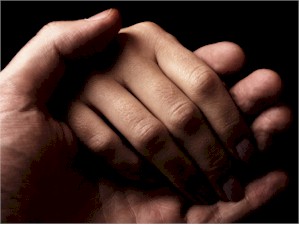
 A lot of people have been asking me questions about the nature of death and the process of dying in the wake of the passing of Whitney Houston. I had to think about whether I would actually get into answering those questions just because there are people who are extremely sensitive and fearful of death who might be offended by open discussion about it. However, the nature of fear is the unknown and I think if more people understood death, then they wouldn’t be so afraid of it. So I’m going to answer the most common questions I get based on my personal experiences with going through the death process with people.
Please understand that this is a blog about the general process of dying, not entirely specific to Whitney Houston. I personally don’t feel that it’s appropriate to put her process on blast so soon after her passing. This blog is meant to help people cope with their fears of death, not sensationalize a tragic event in pop culture.
The most common misconception I hear about death is that people think it is somehow a mistake when someone dies “young”. The truth is not a single person in existence dies before their predetermined time, even when it is a child who has died, which is a difficult idea to understand when you are facing the loss of a young loved one. The only exception to this rule is suicide. People who take their own lives, in my opinion based on personal experiences, are changing the conditions of their pre-planned life paths by taking their own lives – an act which is against universal law. People have allotted time for their lives, no matter long or short, and there is always a reason for how and when they die but suicide is outside of it. There is always a bigger lesson to be learned. Either the person has completed their lessons for that lifetime or their death is meant to help other people with their own lessons. It is never an accident or a mistake. There is a reason for everything. Every suicide I’ve encountered, however, has to go through a serious process of healing on the other side and they are often prohibited from reincarnating until they understand what they’ve done, just as people who have committed murder.
The second most common misconception I hear about death is that people think if the dying person is not surrounded by people they love, they die alone and it’s all very sad. This is absolutely not true and I can speak from personal experience of witnessing it myself. Death is not a finality. It is just a transition. The soul, the consciousness, whatever you want to call it, does not cease to exist when the body dies. There is entirely too much emphasis placed on the importance of the body. After we die, the body has no more value than discarded dirty clothes in the laundry. In the next lifetime, we will get a new set of clothes – a new body. But during the transition from physical world to the spiritual world, it is absolutely not true that we go through it alone. Just like living people here are helping people prepare for death, spirits in the afterlife are also doing the same there end. Souls of the people we have lost along the way are aware when her death is coming and they will come back to sort of hold our hands through the process. Even if the death is quick or if it is lingering, the process is basically the same. Love is not a connection that can be broken with death and our loved ones are still able to help us.
Several years ago, the man I regard as my stepfather died of cancer. By the time he was diagnosed, it was too late for medical intervention, so he decided to go home and die as natural as possible, aside from painkillers and such. I moved back home for the last three months of his life to help my mother through it. We weren’t sure when he was going to go but as his time drew closer, the atmosphere in the house began to change. There are, for lack of a better term, walls between the physical world and the spiritual world and when someone is getting ready to die, the walls become very, very thin in order to allow loved ones of the soon-to-be deceased to come and go and help as necessary. A lot of people are not aware of these subtle changes in the environment because they are so wrapped up in their own grief that they can’t feel it, but mediums and such have long reported this kind of phenomena. Outsiders coming into our house often told us that the energy in the house felt different – it felt heavier and crowded as if there were a lot of people around but there weren’t, not that they could see anyway.
As my stepfather moved in and out of consciousness toward the end, he was telling us about how his parents and other people were coming and going and helping him get ready to go. This was not a hallucination because he was very lucid when he was awake and he was always able to tell us what day it was, what his name was, etc. They were giving him spiritual lessons to pass on to us before they took him, including why he was being taken away from us after only five years of being with my mother. We were lucky to get some spiritual answers like that which would be of great comfort to us after he was gone. The fact that we were aware of the other side being involved in his transition from life to death helped us get through it and we recovered from grief much faster because we knew not only was he still in existence but he was still looking after us in his own way. That is true for everyone who has passed away. They still exist and they are still looking after us from their spiritual position.
Even when death comes quickly, such as an accident or something of that nature, in the majority of cases, the person who is dying is collected by their loved ones. However, it is important to note that moving on into the afterlife is a choice. Dying is not a choice but moving into the afterlife is a choice. Loved ones will come and say this is what’s happening, come with us, we will help you, and so on and so forth, but free will exists in spirit just like it does in the physical. If a person who has died refuses to move into the afterlife, then they become stuck and that is how a haunting happens. Sometimes a person is not aware they had died because the death happened so quickly and their loved ones are not able to convince them that they have in fact died. That is another cause of hauntings. However, hauntings are not forever. A soul, at any time, can choose to move into the afterlife and will therefore end the haunting. There are a lot of cases where a haunting will suddenly end and never start again. This because the soul finally accepted death and moved on to the afterlife. Sometimes it takes living people to essentially stage a “taking back my house” ritual in which it resembles a bit of an intervention for the spirit to say they have died and they need to move on. Even if a person dies very suddenly, if they have accepted the death, they will move on to the afterlife. It’s really a soul by soul basis as to who moves on and who stays and for how long.
The only difference between someone who is dead and someone who is alive is having a body or not. That’s it. They live in their world and we live in ours but they can look after us from there and some of us can see them from here.
I’ve also heard several people saying over the years that they are afraid so-and-so is angry at them because they weren’t there when they died. I wish to help people understand better that this is not true and I have never ever encountered a spirit who says, “I’m furious with so-and-so because they didn’t come say goodbye to me before I died.” That has simply never happened. That kind of guilt is a hangup of the living and needs to be released because it’s not doing any good and it’s only causing harm to yourselves. When a person dies and successfully transitions into the afterlife, there is no such thing as anger or sorrow or any other negative feeling of that nature. It simply isn’t the nature of the soul. Unhappy spirits are the ones who are earthbound – the ones who haven’t accepted their death. The majority of people will go on to the afterlife where everything is forgiven. There is no such thing as being angry that so-and-so wasn’t there when they died. As soon as you die, you are no longer interested in your body or what happens to it. Your body is not you. Your soul is you. They are extremely aware of the love we give them throughout their lives into their deaths and being present when they die is really just a miniscule concern when you add up lifetimes of love. Even if there was a rupture in relationships that were never resolved before death, you have to remember that they are in a position of having much more knowledge about everything in the universe than we do here within the limitations of the body. Let go of your guilt because they have let go of it where they are now.
The point at which the soul leaves the body is debatable and not at all a “rule”. We all leave our bodies from time to time for a reprieve when we are asleep but the majority of us never know it. This is called astral travel or astral projection. Sometimes people can do it at will. When it comes to either severe illnesses or actually dying, the soul will actually leave the body, from what I have seen, before the body actually dies. This is not true in every cause of death, however. I’m talking about people in comas, people suffering with terminal illnesses who drift in and out, people who drown, and so on and so forth. It’s especially true that the soul leaves the body before the body dies when the body is taking an extremely long time to die. This is the universe’s way of sparing us of pain and suffering. So in that respect, sometimes death comes very quick for people even when it looks like it’s taking a very long time. They are saying that perhaps Whitney Houston drowned in her bathtub due to being unconscious from taking Xanax. Again, we don’t know if this is true but I’m using it as a temporary example. She probably went very quickly without suffering very much at all, if at all totally, because being unconscious facilitated her the ability to leave her body immediately with the help of spirits of loved ones around her. Another example would be a friend of a friend of mine who was killed in a terrible car accident many years ago. I am entirely certain that she left her body instantly and didn’t feel a thing even though the body she left behind was terribly mutilated and burned because of the accident. The soul is amazingly resilient and the body is amazingly delicate.
So how does this entire thing affect people who have died and been brought back to life? That is quite simple. It simply wasn’t there time. This is something that is commonly reported in near-death experiences. When the person dies temporarily and is greeted by loved ones, they are almost always told the same thing: “It isn’t your time yet.” Again, this goes back to the knowledge that nobody dies before they’re supposed to die. Near-death experiences are designed to be a wake-up call for the people experiencing them as well as the people who hear their stories. There is a purpose in near-death experiences. Without them, we would not have faith that there is life after death and we would not be inspired to do better, to live a fulfilled life, and to do what is necessary for making the world a better place. Occasionally people in near-death experiences will be given a choice about whether to die or come back and a very large number choose to come back, probably because something inside of them knows that it isn’t their time yet. Again, free will plays a large role in these things but we usually do what is best for everyone around us, including ourselves.
I hope that helps some of you find answers to your questions about death and gives some comfort about the process. I really encourage you to go and read about near-death experiences if you are feeling fear about it because people who have come back will give you hope. Another idea is to watch I Survived… Beyond And Back, which is a show on Bio that allows people to talk about their near-death experiences and teach us what they have learned. The common theme with all of them is, “I’m no longer afraid to die.” And neither should you be afraid. It’s just a transition from one world to the next.
Read More