



Honoring the Dead: My Ancestor Remembrance Ritual

Posted by Jessica Jewett No Comments »

Samhain Ancestor and spirit bonds are the most sacred aspects of Samhain in my tradition. This is my personal ritual shared with you in good faith that you’ll use it responsibly for the remembrance of those who made you who you are today.

You may perform this ritual at your altar, or somewhere else comfortable, or it can be performed at the cemetery with a portable altar. However, it must be stressed that you cannot trespass after cemeteries are closed or in cemeteries where employees might frown upon your ritual work. Any cemetery will do but the magick will be more potent if your ancestors or loved ones are buried there. When in doubt, perform the ritual at home. Do not break the law.

Tools

  • Spirit object
  • Graveyard dirt
  • Offering bowl
  • Three white candles
  • Matches
  • White flowers
  • Method

    Perform the opening of the circle if you do that sort of thing.

    The spirit object should be anything pertaining to your spirit in question–a photograph, an object they owned, or a piece of parchment paper with their full name written on it. Place an offering bowl of graveyard dirt (much better if it’s from the spirit’s own grave but not required) in front of the spirit’s object.

    Place three white candles with matches (I prefer natural implements like wooden matches over lighters). Two candles should be on either side of the spirit object and graveyard dirt with the third candle behind the spirit object. The three candles should form a triangle around the spirit object and graveyard dirt bowl.

    As you light each candle, raise it to the sky and recite the following:

    “Upon this sacred Samhain night, I offer light to honor [Full Name]’s birth.”
    “Upon this sacred Samhain night, I offer light to honor [Full Name]’s life.”
    “Upon this sacred Samhain night, I offer light to honor [Full Name]’s death.”

    (Hint: Irish-speaking people tend to pronounce Samhain as sow-an and some dialects of Gaelic-speaking people have said it’s like sahv-in, sow-een, shahvin, sowin. The Scots Gaelic spelling is Samhuin or Samhuinn. Learn the proper way your ancestors would say it if you’re of Gaelic or Celtic blood.)

    Next you want to take your white flowers. Use your instincts about which type of flowers you think would be best. People in the nineteenth century used white lilies at funerals a lot and I believe carnations were used too. I know Lilies in particular were known as a death flower. If your spirit in question had a favorite flower, use it.

    For my purposes, I prefer white roses in rituals that honor spirits long after the funerary period. White roses are symbols of conveying respect, paying homage, and they express hope for the future, which far better suits this type of remembrance ritual as opposed to remaining caught in the sorrow and grief that lilies and carnations can sometimes conjure. It’s important to maintain the distinction between grieving and remembrance. Grief will hold a spirit back. Remembrance will set it free.

    Hold your bunch of flowers toward the sky. Say, “Upon this sacred Samhain night, I offer flowers to honor [Full Name]’s spirit.” Place the flowers below the spirit object and graveyard dirt offering bowl. Essentially the spirit object and bowl should be at the center of a diamond–lit candles marking the side points and top point with the bunch of flowers marking the bottom point.

    Then recite a prayer, a spell for peace, a poem, or even a song. Since you’re working for the remembrance of an individual spirit or generally remembering all your ancestors, this type of ritual can be personalized. If your spirit had a favorite fitting poem or favorite fitting song, recite the words for them. If you’re not sure, I found this poem online a few years ago and I quite like it for this ritual. You may use it too.

    Do not stand at my grave and weep
    I am not there, I do not sleep

    I am a thousand winds that blow,
    I am the softly falling snow
    I am the gentle showers of rain,
    I am the fields of ripening grain

    I am in the morning hush,
    I am in the graceful rush,
    Of beautiful birds in circling flight
    I am in the starshine of the night

    I am in the flowers that bloom
    I am in a quiet room
    I am in the birds that sing
    I am in each lovely thing

    Do not stand at my grave and cry,
    I am not there, I do not die.

    (Mary E. Frye, 1932)

    Then you should say something to the effect of, “[Full Name], may your spirit know the love and inspiration you’ve given the living upon this Samhain night. Go in peace. I honor thee. So mote it be.” I don’t often say so mote it be since I’m not Wiccan but I figured a lot of you out there are and you can use it. My version is only slightly different. I say, “I honor thee. Through your wisdom, I wish to see. Fare the well until our reunion and great jubilee.”

    Take a moment to meditate in silence as you see fit.

    It’ll then be time to end the remembrance ritual (when you’re ready). When you snuff out each candle, say aloud, “I put out the flame but I don’t put out the light.” Perform the closing of the circle if you do that kind of thing and ground yourself from any excess energy.

    Read More
    Honoring the Dead: The Samhain Altar

    Posted by Jessica Jewett No Comments »

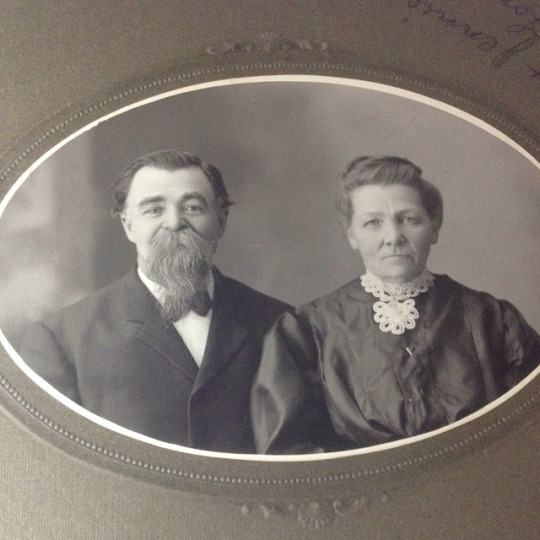
    Rulon, Newell Family

    Rulon Family

    Lois Jewett

    The people in these pictures are five generations of my maternal family line (my mother is generation six and I’m generation seven). I was taught from diapers that remembering where we came from and honoring the spirits of our ancestors was very important. For that reason, ancestor remembrances are the most sacred part of the Samhain period of the year for my family and me.

    As I wrote in my previous post, The Myths and Truth of Samhain: I remember being seven and I’d have to listen to stories about relatives I never met while putting on a ballerina tutu to go trick-or-treating with my friends. At the time, I had trouble understanding why dusty photos of long-dead relatives appeared on my grandmother’s dresser amid candles every autumn and winter. Now I recognize it for what it was – an altar. We came from Irish people who held onto the old ways and (and later mixed them with Christian ways, mostly for show). It all got passed to me too, a little seven-year-old girl putting on a tutu on Halloween and wondering why my grandmother was drilling separation of cultures into my head.

    Changing my altar to focus on deceased friends and family is one of my main points of focus at Samhain. It’s fairly simple to dress up an existing altar for the different periods of the pagan year. Also, it should be noted that Samhain goes throughout the month of November (the festival itself is just sundown to sundown from October 31 to November 1). In other words, keep your Samhain altar up until you’re ready to switch to Yule decorations. I usually assemble around October 27 and then I wait until after Thanksgiving to dismantle.

    Just for personal aesthetics that represent the season, I get a couple of little pumpkins and pomegranates from the grocery store or farmer’s market. I gather fallen leaves from my yard to scatter around my altar table. Buying the fake stuff doesn’t sit well with me. I need to use things that will decay on their own, not create more landfill, but watch out for bugs when you bring natural decorations indoors.

    If you can get it without trespassing, put an offering bowl of graveyard dirt in the spot on your altar where you represent the earth. The magick is even more powerful if the graveyard dirt comes from the graves of your ancestors. Always ask permission and wait for a sign before you take the dirt. Some spirits don’t like people touching their graves. They’ll give you a sign if the answer is no. Always leave an offering of fruit or flowers in exchange for the dirt too. Graveyard dirt will be used in a ritual on the feast of Samhain.

    I also change my candles to orange, dark red, black, etc., for the season if I have those colors on hand. I prefer tapers because they look elegant to me and they’re usually too tall for my cat to act on his fire curiosity. Otherwise I just keep my regular gold and silver candles for the moon and sun. Sometimes I only use gold candles at Samhain in my effort to symbolically provide warmth and light during the cold, dark half of the year. I also use one white candle per spirit I’m honoring. If you don’t have a specific number, just use whatever number you please, or create an exalted focal point with a larger pillar candle to represent all of your spirits.

    If you respond to scents like I do, use warm spices as opposed to florals and fruits. Remember we’re entering the cold, dark half of the year. Our ancestors didn’t have access to mail order flowers from tropical places. When in doubt, think of baking, spices, hearthfires, smoked meats, etc., when choosing your incense and resin (unless a specific ritual calls for a specific mixture).

    Also, you may also put photographs of your loved ones on the altar along with personal items they owned if you have any. This is an important part of my Samhain altar. Since I lost my grandmother in July, it’s the most recent death, and my tradition dictates that she gets the position of honor this year. I keep candles lit each night for Samhain season to honor my loved ones who are no longer living in the physical.

    Don’t forget your deities if you have them too. Leave offerings of autumn flowers like chrysanthemums and marigolds, and autumn foods like breads and gourds, thanking them for working with you during the past year and asking for help in succeeding in the year to come.

    Read More

    The Myths and Truth of Samhain

    Posted by Jessica Jewett 1 Comment »

    Samhain Ritual If you’re interested in the Celtic or Gaelic festival of Samhain, please observe it correctly. October is not actually Samhain’s month. The festival begins on the night of the 31st of October but the month of Samhain is November. Its beginning corresponds with secular Halloween and that’s why we think of it as an October thing today. In modern society, Halloween is spreading into all of October because, in my opinion regarding America, November is all about Thanksgiving.

    Here’s the basic truth.

    Firstly, Samhain is not pronounced sam-hane. Don’t do that. It’s disrespectful to keep mispronouncing words after you’ve been properly taught. Irish-speaking people tend to say sow-an (my source is Trinity College Dublin) and some dialects of Gaelic-speaking people have said it’s like sahv-in, sow-een, shahvin, sowin (with “ow” like in “glow”). The Scots Gaelic spelling is Samhuin or Samhuinn. Since my people were mostly Irish, I stick with the example Trinity College Dublin offered.

    Samhain is something that often got misidentified before as a “Celtic Death God”, which is not true. There was no such god and the story was, in fact, invented in the 18th century and propagated largely by Protestants nervous about pagans. Samhain is simply the initiation of the winter, the end of the harvest period, and a time to honor the dead in the pre-Christian Irish calendar. Traditions reflect the beliefs of Irish and some Scottish people in “in between” times when seasonal changes coincide with the unseen world and the death of the earth. The last day of October into the first day of November is an in between time, between life and death.

    The pre-Christian Irish and some Scottish calendars were basically divided into two parts – the light half of the year beginning at Beltane (May) and the dark half of the year beginning at Samhain (November). There were other festivals coinciding with agricultural phases, of course, but the year began at Samhain and turned to the other half at Beltane. Winter and summer. Samhain is the end of the harvest period and the beginning of winter when people stayed closer to home and hearth.

    In Modern Irish the name is Samhain, in Scottish Gaelic Samhainn/Samhuinn, and in Manx Gaelic Sauin. These are also the names of November in each language, shortened from Mí na Samhna (Irish), Mì na Samhna (Scottish Gaelic) and Mee Houney (Manx). The night of 31 October (Halloween) is Oíche Shamhna (Irish), Oidhche Shamhna (Scottish Gaelic) and Oie Houney (Manx), all meaning “Samhain night”. 1 November, or the whole festival, may be called Lá Samhna (Irish), Là Samhna (Scottish Gaelic) and Laa Houney (Manx), all meaning “Samhain day”.

    These names all come from the Old Irish samain, samuin or samfuin [?sa??n?] all referring to 1 November (latha na samna: ‘samhain day’), and the festival and royal assembly held on that date in medieval Ireland (oenaig na samna: ‘samhain assembly’). Its meaning is glossed as ‘summer’s end’, and the frequent spelling with f suggests analysis by popular etymology as sam (‘summer’) and fuin (‘end’). The Old Irish sam is from Proto-Indo-European (PIE) *semo-; cognates include Welsh haf, Breton hañv, English summer and Old Norse sumar, all meaning ‘summer’, and the Sanskrit sáma (‘season’).

    (Source.)

    Samhain is a time to focus on and honor the dead, mirroring how the earth is going dormant like death for the cold season. Unlike Halloween, which is light-hearted and viewed as make believe, honoring the dead at Samhain is a deeply spiritual time, often solemn, and many rituals are done in private. This is how I was taught. And I remember fireplaces going in my childhood homes around the Samhain festival. Fire was an important element.

    My grandmother always made sure I understood the difference between Halloween – them – and the importance of remembering the dead, both people and the planet – us. There was definitely an us vs them mentality to many of the holidays we observed in my childhood. I remember being seven and I’d have to listen to stories about relatives I never met while putting on a ballerina tutu to go trick-or-treating with my friends. At the time, I had trouble understanding why dusty photos of long-dead relatives appeared on my grandmother’s dresser amid candles every autumn and winter. Now I recognize it for what it was – an altar. We came from Irish people who held onto the old ways and (and later mixed them with Christian ways, mostly for show). It all got passed to me too, a little seven-year-old girl putting on a tutu on Halloween and wondering why my grandmother was drilling separation of cultures into my head.

    In Octobers and Novembers of my childhood growing up under my grandmother’s care, there was a lot of feasting. It went on from Samhain through Thanksgiving. My school friends liked to come to my house because of the feasting – my grandmother fed everybody she met. I asked her why once because parents weren’t doing that at my friends’ houses and she said it was the way to appreciate harvests on the farm. While she often complained about how hard the work was on the farm (we were agricultural people for hundreds of years up until my mother’s generation), she did maintain cycles of feasts and lean times even while living in an apartment as an older woman.

    November is the time of Samhain. The festival begins at sundown on October 31 and (at least in my family tradition) goes on for several days. In Irish culture, Samhain is the full month. In my family, we eat, we set up our ancestral altars, we practice divination, and we prepare our homes for the cold half of the year. This Samhain, my grandmother will be added to my altar. She died in July.

    I am a witch who enjoys secular Halloween, Thanksgiving, Christmas, etc., but my real spiritual practices lie in what’s underneath. My spiritual new year begins on November 1, not the literal new year of January 1. In fact, New Years Eve is the one secular holiday I don’t observe. I don’t go out and party. I rarely stay up until midnight to see the ball drop. My new year comes earlier and I’m much more comfortable with my traditions to mark the occasion. Of course, the evidence to say Samhain is the Celtic or Gaelic “New Year’s Day” is actually not very strong but it became a popular theory later when Celtic traditions underwent a revival in the 19th and 20th centuries. It was remarked that Samhain traditions have a running theme of new beginnings, so it became synonymous with the idea of the new year. Is it true in the pre-Christian period? I’m not sure, however, I follow my family traditions. We picked up a sorta kinda idea of Samhain the new year at some point – probably during the revival period of my great-great grandmother’s time.

    Celtic and Gaelic people are still very much living, breathing cultures. I’m not going to write off newer family traditions because they were picked up by my Celtic and Gaelic family members after the pre-Christian period. Hereditary cultures largely based in oral tradition evolve over time. They’re not static. We need to give as much study and attention to all periods of our ancestral cultures, including the state of those cultures today, and learn as much as we possibly can. Being Americans descended from Celtic and Gaelic people means we’re often viewed as not “really” of those cultures. We have to work harder on the bigger picture, not just the pre-Christian period.

    So while Halloween, in essence, came from Samhain, what’s celebrated today is what I think of as an American folk holiday. Samhain traditions are much more internalized to me because the time marks the beginning of winter when the life on earth is going dormant and we prepare for leaner times as we ask for support, love, and blessings from our ancestor spirits.

    There are a lot of stories out there about the pagan origins of trick-or-treating, of carving gourds, of giving and receiving sweets, of wearing costumes, etc., so I don’t need to rehash all of that now. I tried to talk about the things here that get overlooked in favor of the more entertaining things. Feel free to add your traditions to this post! Are you a German witch? Polish? Russian? A completely different culture? How are your dead honored?

    Read More

    Categories